
Amalia Russiello, the illustrator and creative mind behind Madame Dabi, is an Italian artist with a degree in Art History from the University of Naples Federico II.
After completing her studies, she decided to dedicate herself entirely to illustration, developing a visual language deeply rooted in her affinity with the glamour of the past.
Her artistic vision was further shaped by a formative year in Paris, where she began to define her distinctive Boudoir Aesthetic.
Her style blends the elegance of Art Déco with the playful seduction of Rococo, celebrating and empowering women through their uniqueness and sensuality as expressions of strength and individuality.
Her illustrations have appeared in Le Figaro, Vogue Korea and Dazed Beauty, and she has collaborated with brands including Ladurée, Empress Mimi, Playful Promises and Scarlett Gasque.
Her works are part of private collections across Europe, the United Kingdom and the United States.
Today, through Madame Dabi Boudoir, she continues to reinterpret Boudoir Art with a contemporary eye for the modern woman.
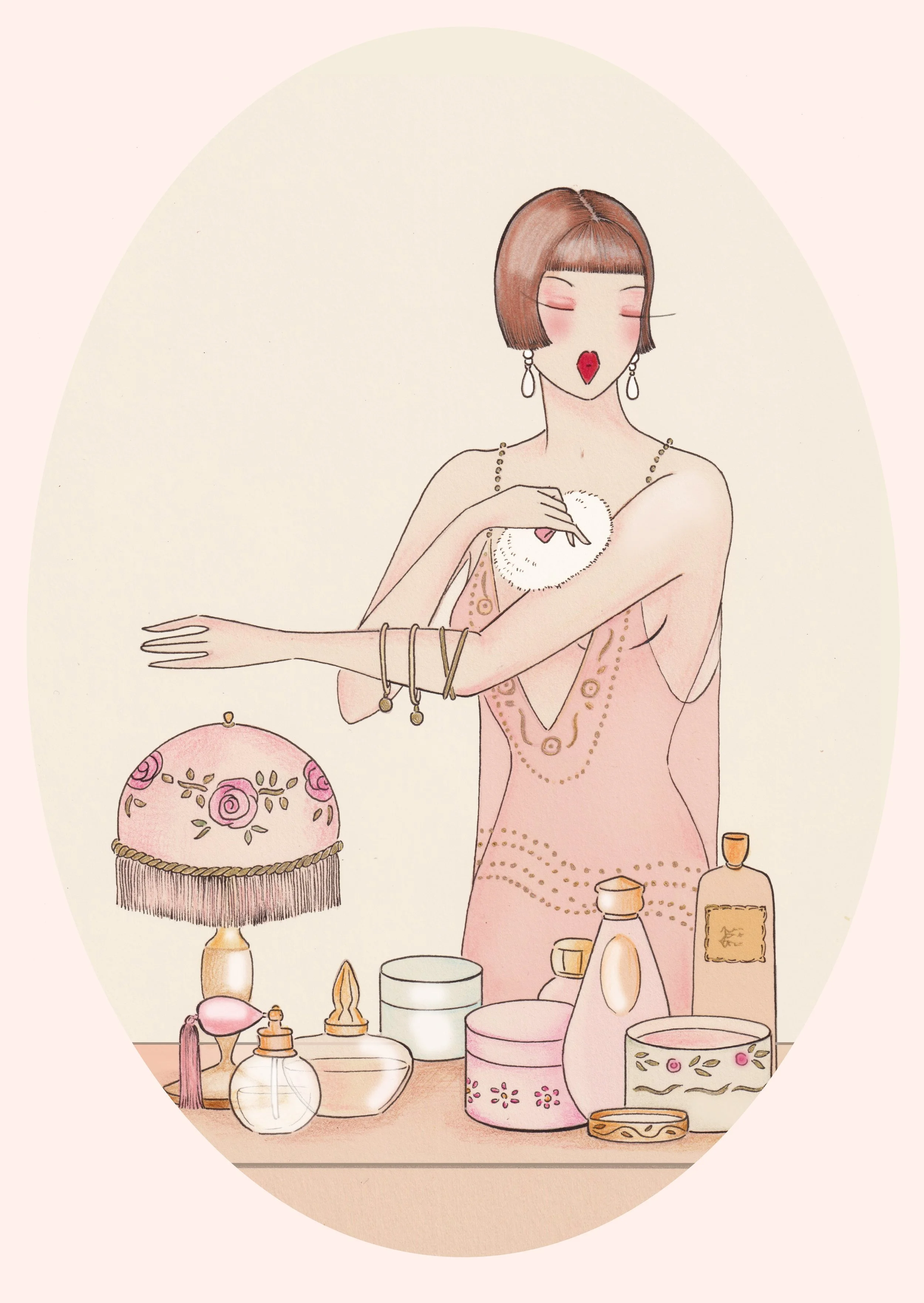
THE BOUDOIR ART
Amalia Russiello is one of the very few contemporary artists devoted to Boudoir Art.
By Boudoir Art, we refer to an artistic language that flourished in the early 1900s, celebrating female beauty, style and sensual confidence in all their forms.
In Paris during the 1910s, Boudoir Art reached its peak of popularity, influencing fashion, illustration and advertising. Newspapers and luxury maisons commissioned artists to depict women who embodied new ideals of freedom, elegance and self-possession.
The women of that era were changing. They had new ambitions, new desires and a new need for images that could represent them beyond traditional roles.
At the beginning of the century, women’s rights movements were emerging, and women were increasingly claiming equality in every area of social life. The chic Parisian women of the time — the flappers — became symbols of this transformation: they smoked in public, wore their hair à la garçonne, dressed with daring necklines, danced bare-legged and chose their lovers for pleasure rather than convention.
This new provocative and chic woman marked a break with the canons of the past, reflecting the desires of a generation of women freed from the restrictions of the Victorian era.
Boudoir Art captured a revolution in attitude: women portrayed as independent, sensual and entirely in control of their own image.
The boudoir was more than a decorative space. It was an intimate and refined room where women could retreat, reflect or receive chosen guests.
Each boudoir bore the mark of its owner. Furnished with taste, adorned with art and cherished objects, it became a mirror of her personality and aesthetic.
In this same spirit, Madame Dabi’s illustrations transform interiors and private spaces into contemporary boudoirs: intimate places where art, femininity and self-expression coexist.
This is the Boudoir Art that Madame Dabi Boudoir seeks to reclaim: the representation of modern, free women.