Carnets d’Artistes Chéri Hérouard
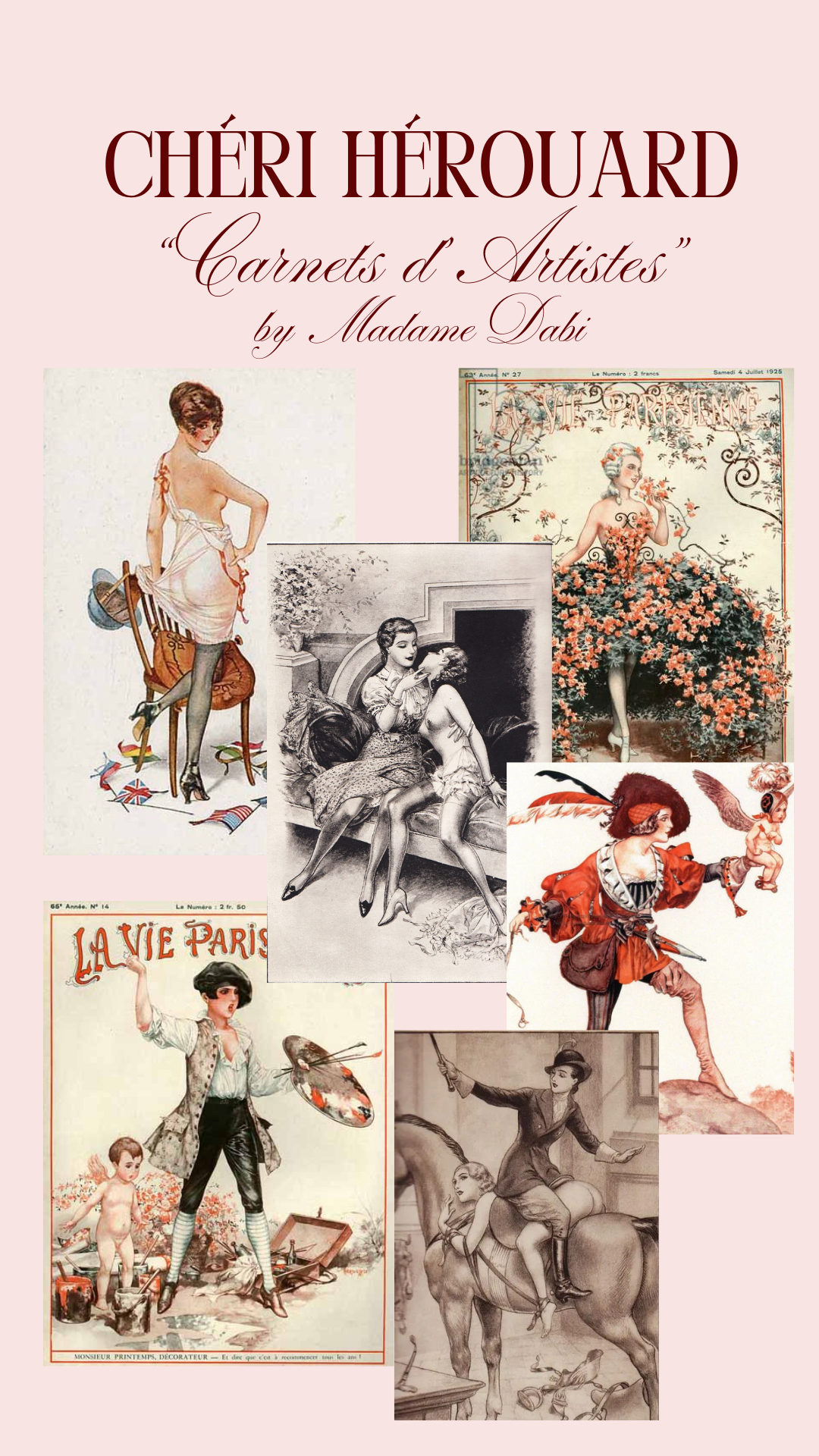
French illustrator Chéri Hérouard created a version of Paris that feels half fantasy, half reality. It is in this space that he lived and worked. Born in 1881 in Rocroi as Chéri-Louis-Marie-Aimé Haumé, he chose drawing early, abandoning a more conventional path to pursue an instinct that would carry him into the pages of some of the most iconic illustrated magazines of the early 20th century.
His name is inseparable from La Vie Parisienne, the sophisticated and subtly provocative publication for which he worked for over four decades, beginning in 1907, becoming one of the defining figures of early 20th-century French illustration.
Hérouard’s work sits at a precise intersection: an equilibrium between playful lightness and refined precision. His women—arguably his most recognizable subject are never vulgar, even when they are clearly complicit in the erotic tension of the scene. They are poised, often amused. There is always a sense of awareness in his women and that detail matters. He did not draw passive muses, he constructed a very specific archetype of the Parisienne: refined, ironic and aware of her own power.
What is particularly striking is the duality of his production. Alongside society illustrations and editorial commissions, Hérouard developed a more explicit body of work under the pseudonym Herric, exploring fetishistic and erotic themes within the broader context of erotic illustration history.
This separation was not only strategic, it reveals an artist deeply conscious of audience, context and the layered nature of desire.
Stylistically, his work retains traces of academic drawing, with precise linework and careful composition, yet it is softened by a theatrical sensibility. Fabrics matter. Gestures matter. The staging of a scene whether a boudoir, a salon, or a fleeting narrative moment is always accurate.
His early fascination with fairy tales and fantastical figures evolves here into something more subtle: a kind of adult fiction rendered through posture, costume, and suggestion rather than narrative excess, anticipating elements later associated with Art Deco illustration.
Hérouard belongs to that moment in French illustration where the decorative meets the psychological. His images do not simply depict, they imply. A lifted hem, a turned back, a glance toward the viewer: everything is calibrated. Even humor, present in many of his compositions, is never careless.
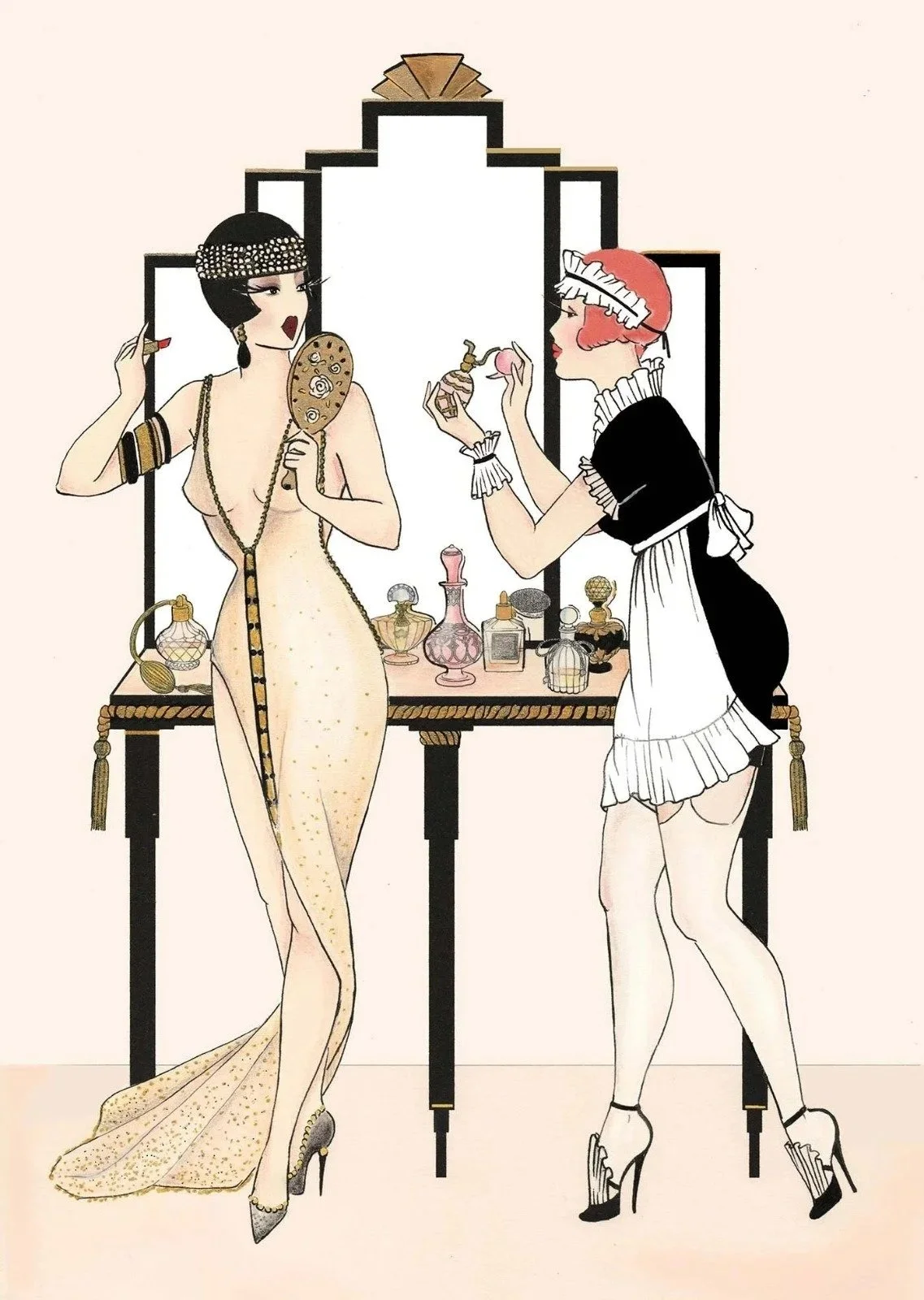
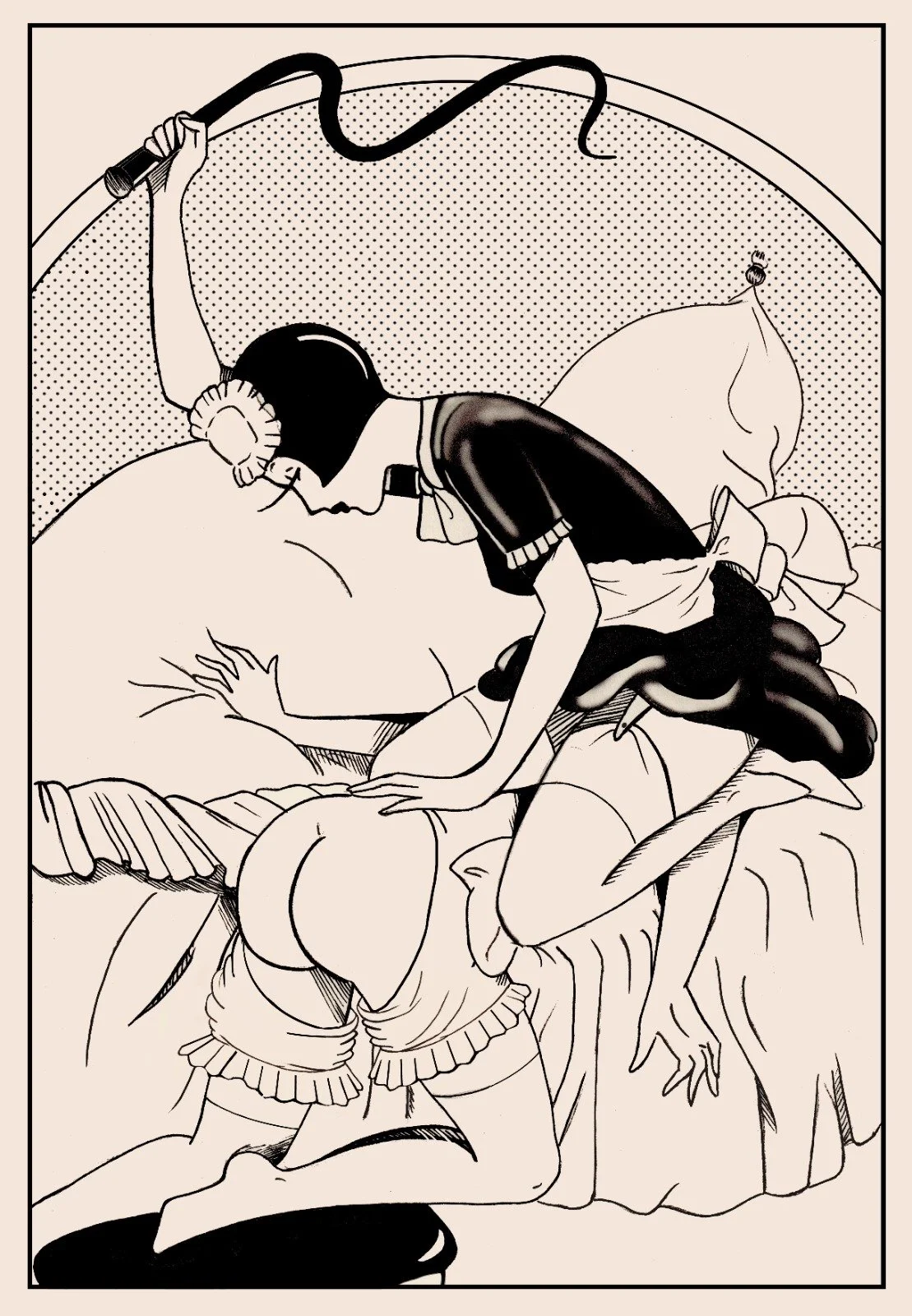
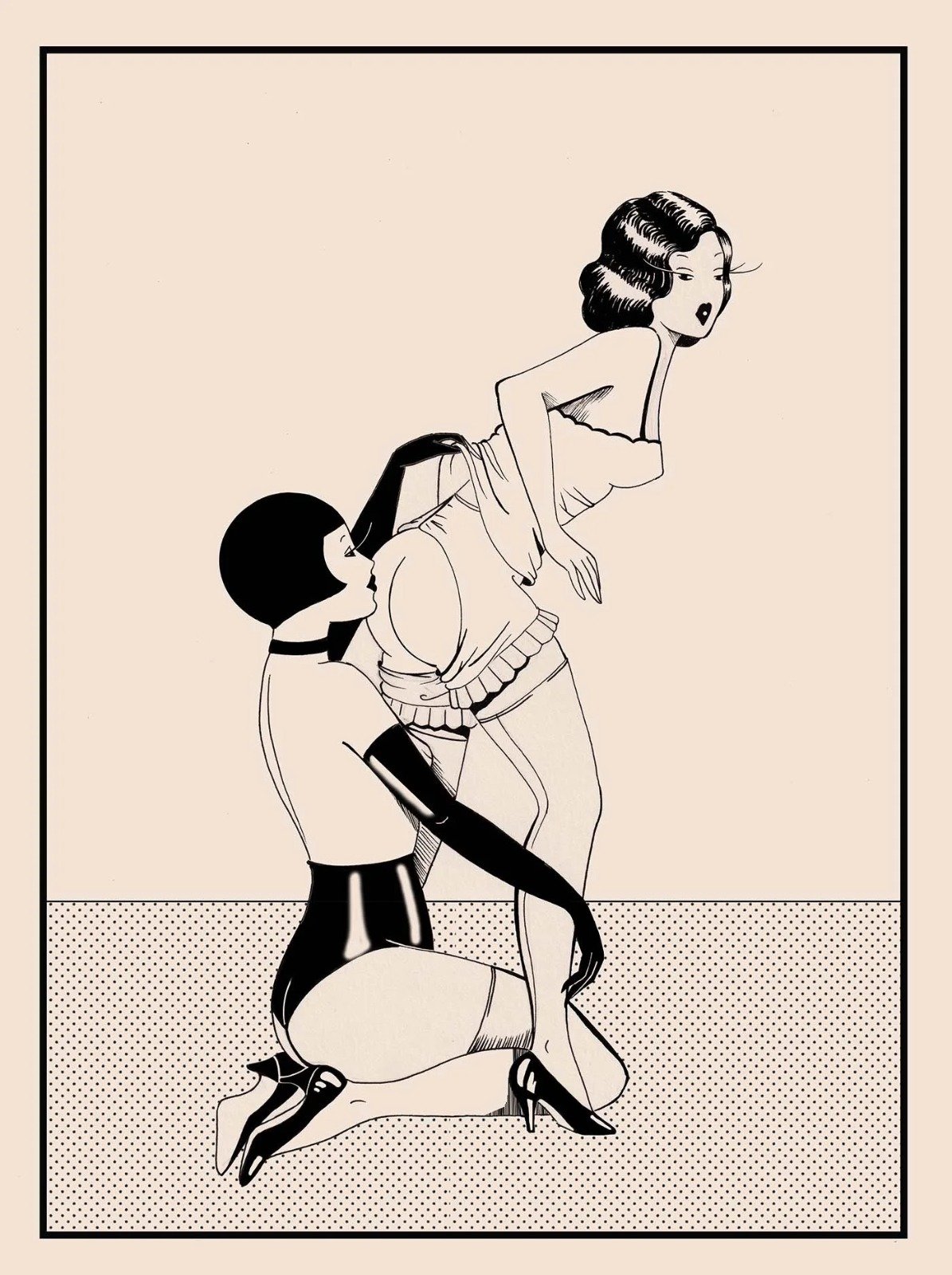
From Hérouard I borrowed a visual vocabulary: the full-bodied, ironic woman, the clean and precise line, the theatricality of historical costumes, that universe made of ever-changing settings (medieval, Rococo, Art Deco). Every detail tells something; an open lipstick, a box revealing its contents, a braid reaching down to the feet, a wig too elaborate to stay in place. This places women at the center of the scene: they are never passive, they are ironic and self conscious even in the most sensual moments.
Hérouard, however, worked for a male gaze, within a mass-market magazine, with a gallant and self-indulgent form of eroticism. I took the same language and handed it over to women, transforming it into something more intimate and explicitly feminist: my illustrations celebrate and elevate women through their uniqueness and sensuality as expressions of strength and individuality, a far more contemporary intention. They wear the same improbable and licentious garments, but they are not offered to any external gaze, they exist for themselves.
This is the distance between us: he portrayed femininity, I claim it.
With love,
Madame.
Madame’s picks for you