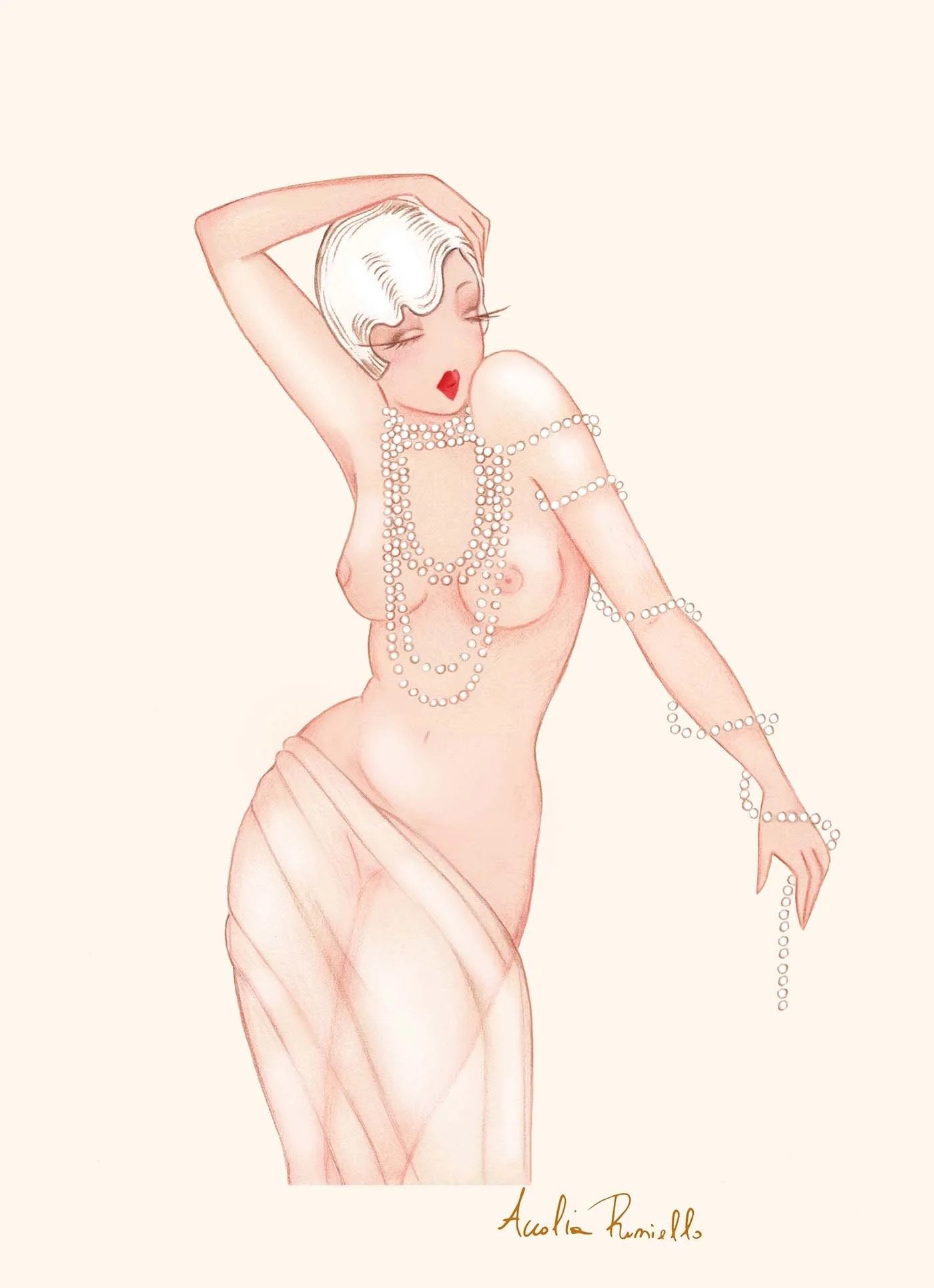
Carnets d’Artistes: Tamara de Lempicka
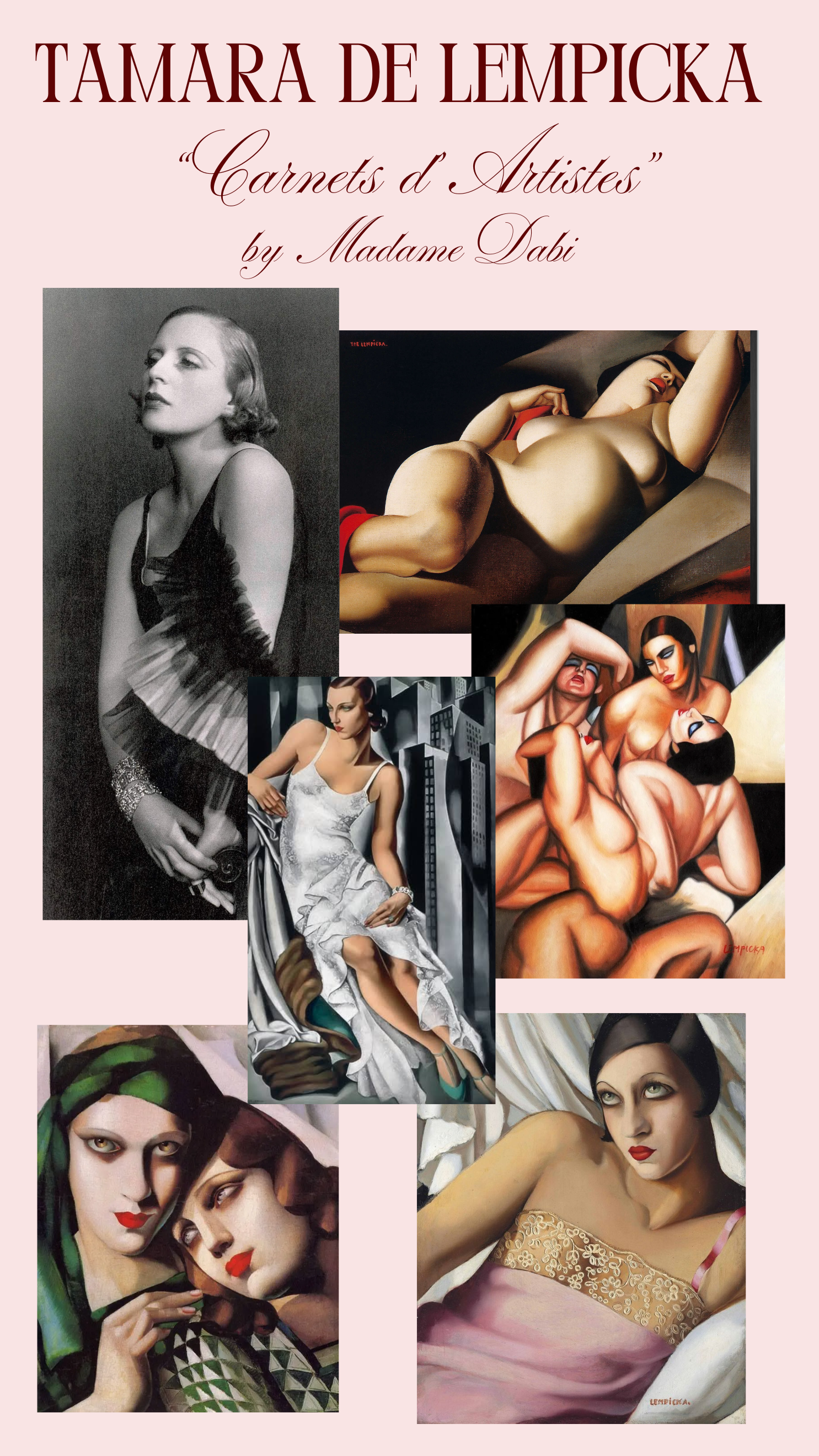
In 1920s Paris, Tamara de Lempicka built her success around women who rarely appear content to remain in the background.
Her portraits and nudes are filled with women: dressed in satin and gloves, reclining, embracing, driving, looking directly back at us. Friends, lovers, socialites and models became the protagonists of the visual language that made Lempicka one of the most sought-after portraitists of her time.[1]
What interests me most is that this happened in an art world still largely shaped by men. Even the female nude — one of the central subjects of Western painting — had historically belonged overwhelmingly to the male artist and the male gaze. With works such as La Belle Rafaëla, The Dream or Group of Four Nudes, Lempicka placed a woman behind the brush as well as at the centre of the image. Desire was no longer observed exclusively from the outside.[2]
Her women could be sensual, glamorous, severe or openly modern, but they possess the space around them. Fashion contributed enormously to this presence. Dresses, gloves, turbans, sculpted hairstyles and sharply defined silhouettes became part of the architecture of the portraits themselves. Her relationship with fashion was so immediate that her famous Self-Portrait in the Green Bugatti was commissioned for the cover of the German fashion magazine Die Dame.[3]
A Boudoir of Her Own
There is also a more private detail of Lempicka’s life that feels particularly close to the way I think about women, interiors and intimacy in my own work.
When she moved into her studio-apartment at 5 rue Guy de Maupassant in Paris in 1925, Lempicka designed part of her own bedroom decoration. The carved lacquer headboard was based on one of her drawings of two women intertwined. Nearby hung her Portrait of the Duchess of La Salle, an imposing female figure dressed in boots.
The Tamara de Lempicka Estate describes the combination as giving the room a distinctly feminist atmosphere.[4]
It is a revealing detail: the female body, desire, art and decoration were not separate territories in Lempicka’s world. They could inhabit the same room.
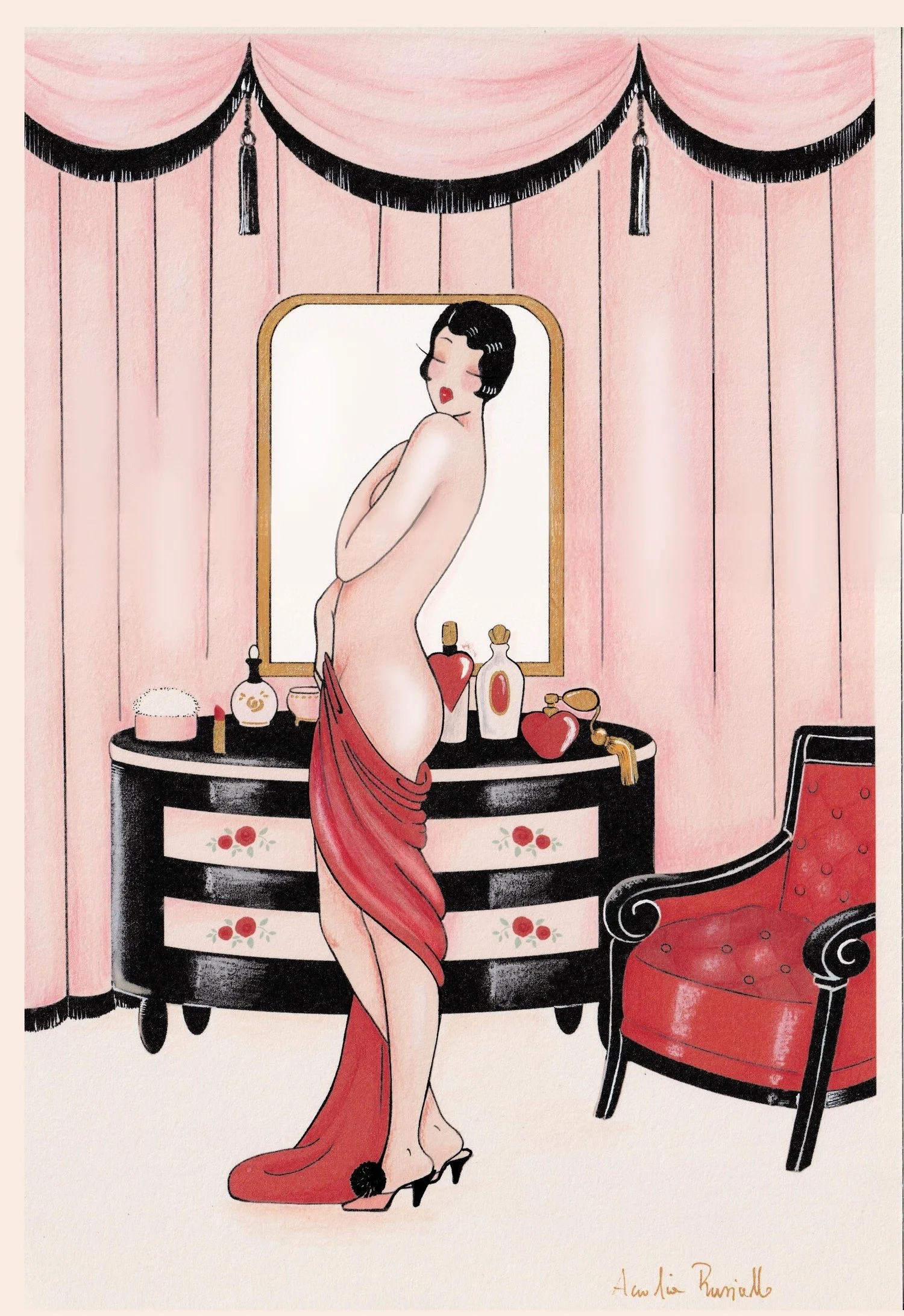
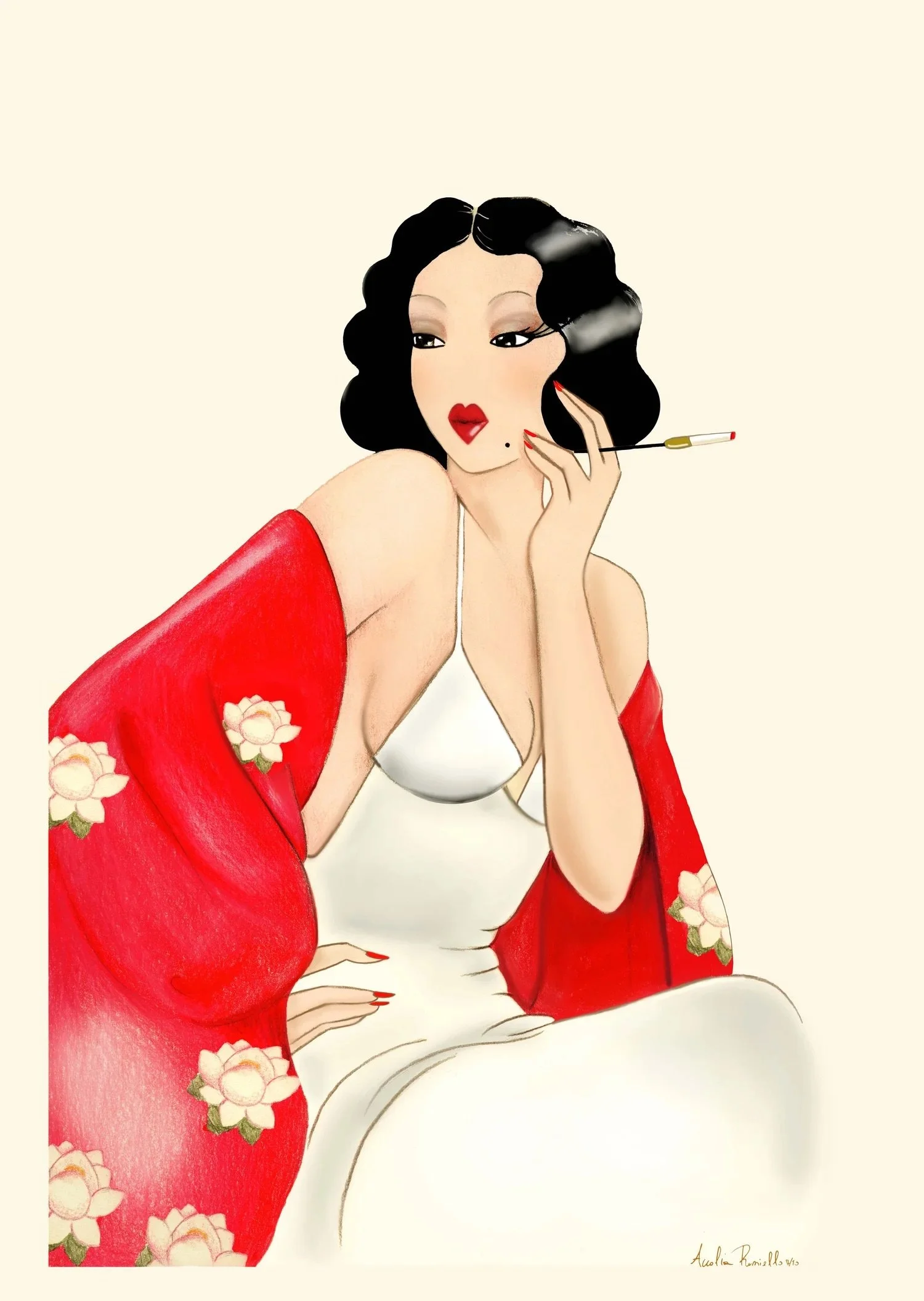
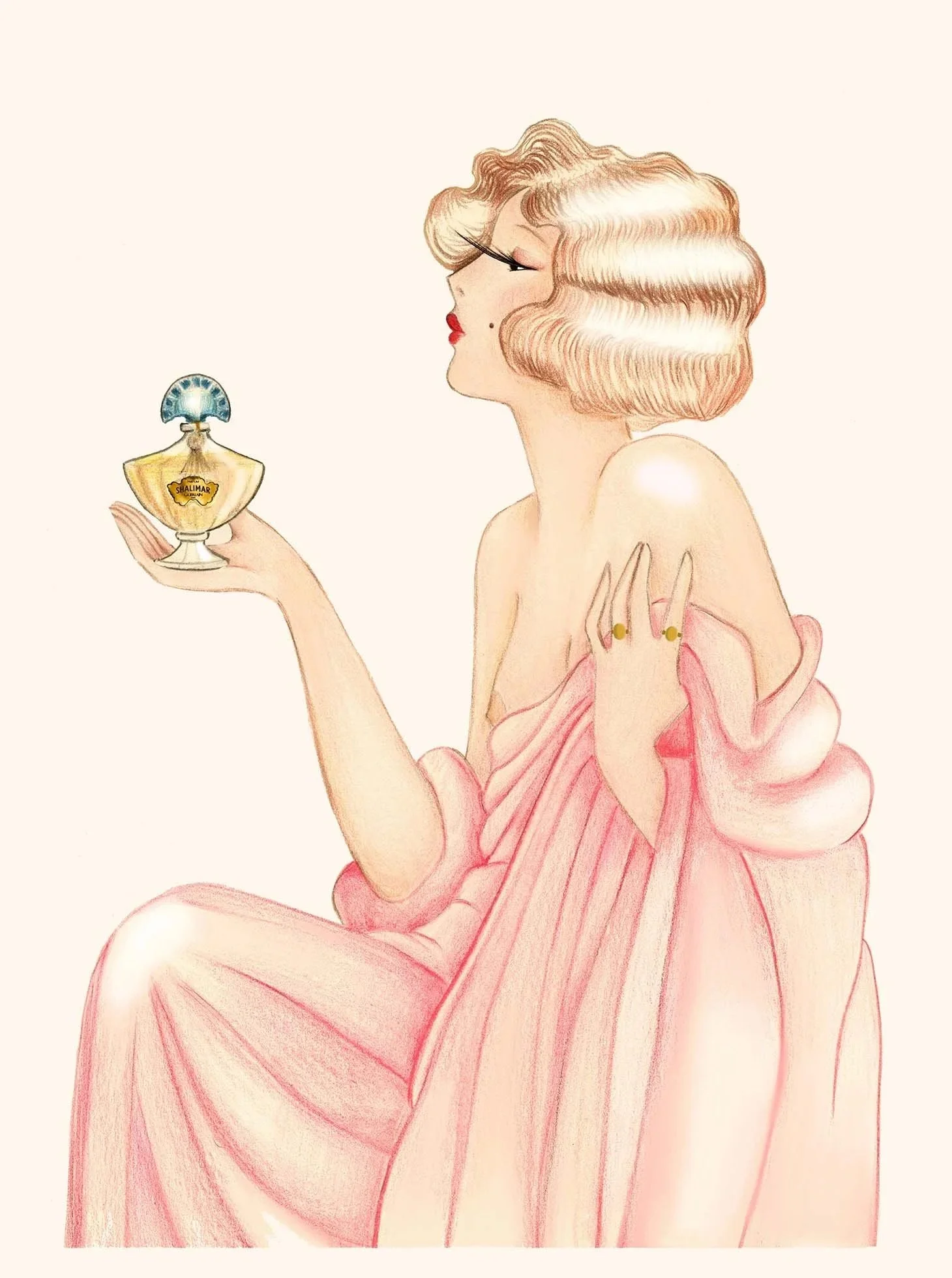
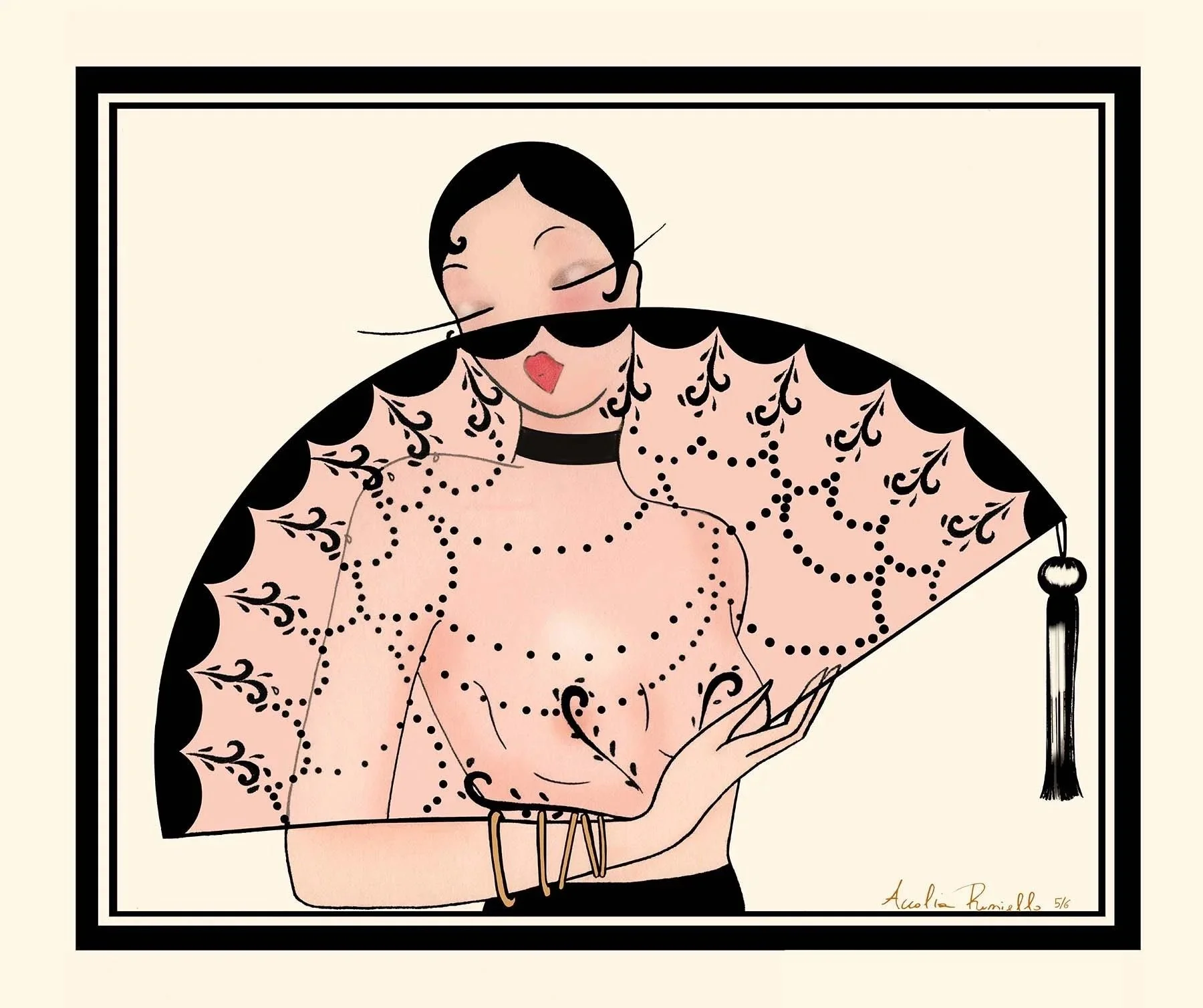
That is also where one of the strongest connections with my own work begins. The female figure remains at the centre of what I draw, whether I am working on an erotic scene or a portrait, and fashion is often part of the way that figure takes possession of the image.
I am continually drawn to the glamour, clothes, hairstyles, make-up and silhouettes of the 1920s and 1930s, not as a way of reconstructing the past, but as part of a visual language that I bring into the present.
What I take from Lempicka is the confidence with which she allows a woman to dominate the image. Fashion may frame her, glamour may heighten her presence, but she remains the subject.
With love,
Madame
Notes
[1] Marie-Émilie Fourneaux, “Meet the Women Who Shaped the Art World in 1920s Paris,” Art Basel, 19 September 2024; Bobby McGee, “The Lustrous Allure of Art Deco Portraiture,” Sotheby’s, 23 June 2025.
[2] Bobby McGee, “The Lustrous Allure of Art Deco Portraiture,” Sotheby’s, 23 June 2025. Sotheby’s describes Lempicka’s female nudes as challenging the historical treatment of the female nude as a “male painter’s domain” and the canonical male gaze.
[3] Bobby McGee, “The Lustrous Allure of Art Deco Portraiture,” Sotheby’s, 23 June 2025; “Tamara de Lempicka,” Museum of Fine Arts, Houston, exhibition page, 2025. Sotheby’s records Self-Portrait in a Green Bugatti as commissioned for the cover of Die Dame, while the MFAH identifies fashion and design as fundamental elements of Lempicka’s work.
[4] Tamara de Lempicka Estate, “Two Hugging Women. Lacquer decor project, 1923,” Catalogue ID A.027. The Estate identifies the drawing as the preliminary design for the headboard in Lempicka’s bedroom at 5 rue Guy de Maupassant and describes its relationship with Portrait of the Duchess of La Salle as giving the room a “resolutely feminist atmosphere.”
Madame’s Art Deco Selection