Carnets d’Artistes: George Barbier
For quite some time I have been following an Instagram page dedicated entirely to George Barbier and the fascinating world surrounding his work. Through it, I discovered Benedetta Agnoletto, whose passion for and knowledge of George Barbier's work is truly remarkable. You can find her IG here.
When I decided to dedicate this month's Carnet d'Artistes to Barbier, asking her to contribute felt like the most natural choice.
What follows is Benedetta's portrait of George Barbier:
“Le Flamboyant” George Barbier is another brilliant, polyhedric representative of that circle of artists who, in early twentieth-century France, found a new way to approach graphic art and painting, preserving figurative elements while renewing the visual language used to narrate the lives and customs of the new upper and middle classes, particularly in Paris.
All this happened while the avant-garde, with its principles of deconstruction, was moving forward.
Georges Augustin Charles Marie Barbier was born in Nantes in 1882, the only son of a wealthy mercantile family. He received a classical education before pursuing artistic studies first at the École Régionale des Beaux-Arts de Nantes and later at the Académie Julian in Paris.
Barbier had shown remarkable talent for drawing and painting from an early age, impressing Alphonse Lotz-Brissonneau, a steel industrialist from Nantes, family friend, and important patron of the arts during the Belle Époque. Through him, George was introduced to the art critic Jean Louis Vaudoyer and the Symbolist poet Pierre Louÿs, who in turn opened the doors of their Parisian circles, including the De Régnier family. Through these connections, Barbier encountered high society, Princess Lucien Murat, the Proust circle, the Rostands, and many others.
Georges—with the final “s”—began his career around 1906–1907 contributing to the same satirical and slightly risqué magazines as many of his contemporaries: Chéri Hérouard, Vallée, Lorenzi, Gerda Wegener and the “Chevaliers du Bracelet”: Brissaud, Charles Martin and Bernard Boutet de Monvel.
In his early years at Le Frou-Frou and Le Sourire, his vignettes already revealed his fascination with feminine elegance and behaviour, often recalling the influence of Henri de Toulouse-Lautrec. Les Dames Seules remains one of the most interesting examples from this period. Barbier quickly earned the distinction of illustrating magazine covers populated by women wrapped in furs, extravagant hats adorned with feathers, ribbons and flowers, frequently admired by gentlemen in top hats and moustaches.
At the time, he signed many of these works under the English pseudonym Edward William Larry, or simply Larry.
From this period also date some of his earliest images that can truly be associated with boudoir art: women at their toilette, often in déshabillé, absorbed in their own beauty rituals, living their lives while ignoring—or openly mocking—the men around them.
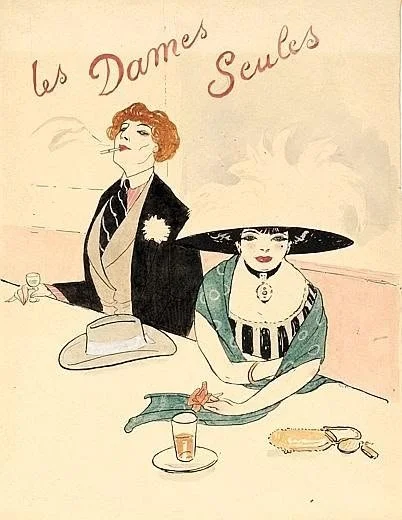
Les Dames Seules, 1910s
The turning point in Barbier's career came with his first solo exhibition in Paris in 1911. Through ninety-two watercolours inspired by ancient Greece, Persia and the revolutionary Ballets Russes of Sergei Diaghilev, Barbier presented figures drawn from myth, legend and dance. Nijinsky and Ida Rubinstein appeared alongside classical heroes and heroines, rendered in brilliant colour and charged with sensuality.
Colour and sensuality, Barbier later explained to his patron, were among his guiding principles, together with the Symbolist influence of teachers such as Chantron and Bouguereau and the mentorship of Count Robert de Montesquiou. Above all, there was a relentless pursuit of grace and beauty.
The exhibition transformed his career. By then he had abandoned his pseudonym and simplified his first name to George. New opportunities followed in fashion illustration, journalism, theatre and ballet costume design, as well as prestigious book commissions including Les Liaisons Dangereuses and Les Fêtes Galantes.
He collaborated with Tomaso Antongini, secretary to Gabriele D'Annunzio in Paris, on the revival of the eighteenth-century Journal des Dames et des Modes. He worked with Brunelleschi on La Guirlande, producing fashion plates and fairy-tale illustrations, including those for René Boylesve's Le Carrosse aux Deux Lézards Verts.
He designed several models for Paul Poiret, as well as works for Worth and De Beer.
Barbier became one of the leading contributors to Lucien Vogel's luxury publications, including La Gazette du Bon Ton and Les Feuillets d'Art. He worked as illustrator, fashion commentator and reporter, writing on fashion, cinema, theatre, music hall and burlesque, often under a variety of eccentric pseudonyms.
He designed posters, portfolios and almanacs filled with colourful illustrations celebrating the fashions of past, present and future, including La Guirlande des Mois, Falbalas et Fanfreluches and Le Bonheur du Jour.
He also maintained columns in La Vie Parisienne and Monsieur, where he discussed fashion and social etiquette, again under different pseudonyms.
By the 1920s, he had joined the costume design staff of the Folies Bergère.
The central figure in Barbier's work is the modern woman: a woman who claims her place in society rather than waiting for it to be granted.
As he wrote in a letter to František Kupka, Barbier was deeply captivated by the beauty of the female body.
His women occupy centre stage. They appear in society salons, theatres and gardens, but also in intimate spaces: boudoirs, bedrooms, bathrooms and swimming pools. They bathe, dress, apply makeup and contemplate themselves. Sometimes a maid assists them. Sometimes a man watches them with admiration, desire or disapproval. Sometimes they are accompanied by another woman whose role remains delightfully ambiguous.
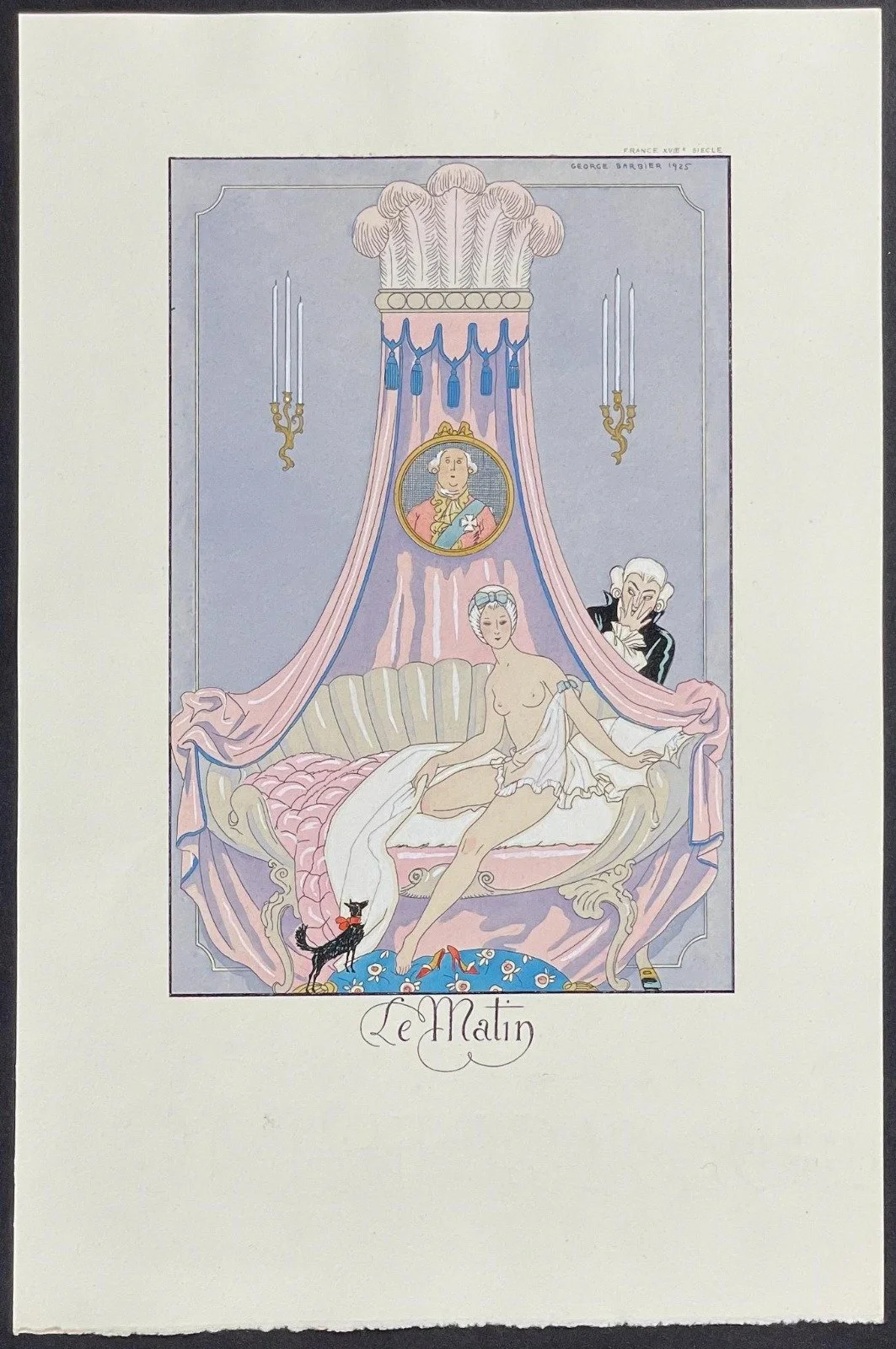
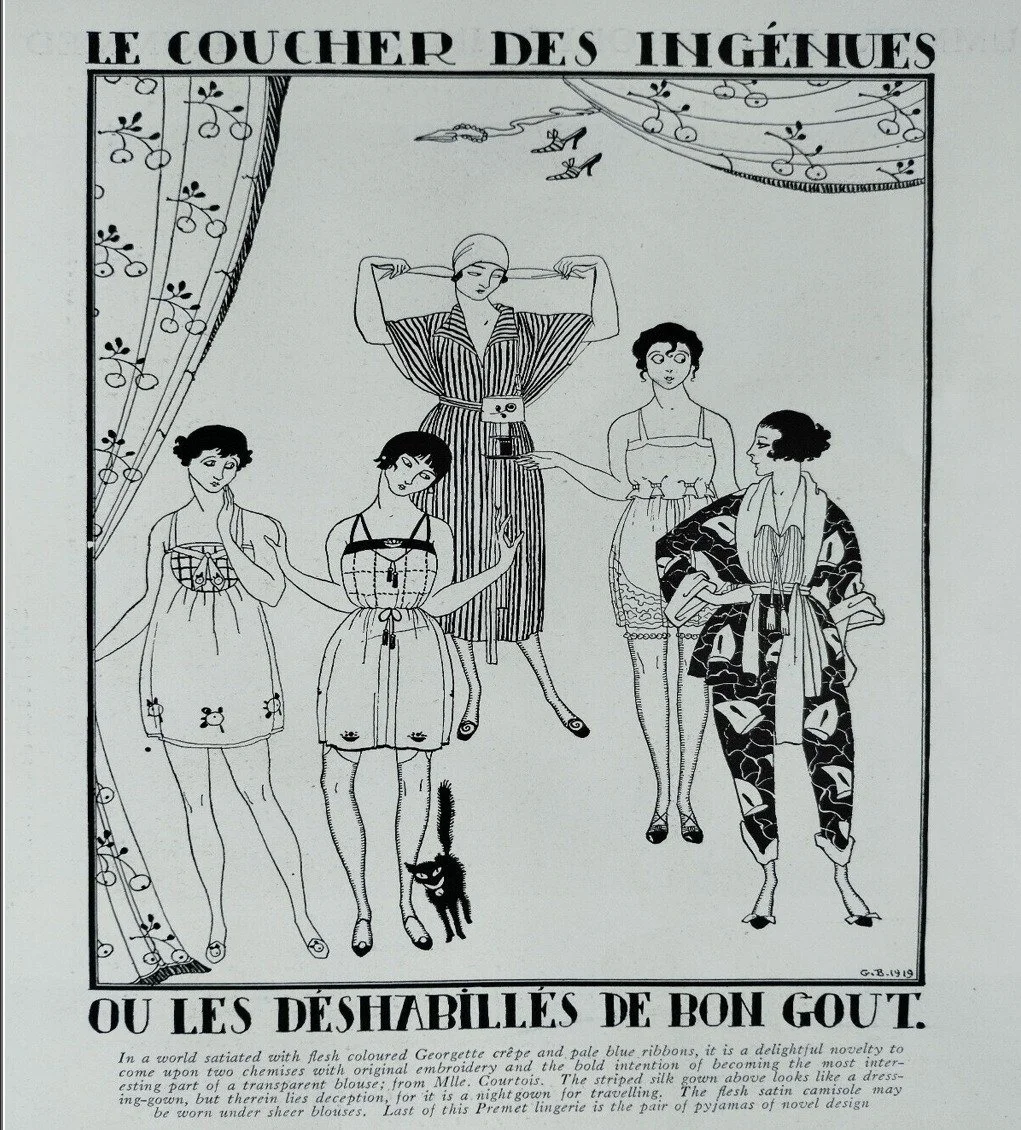
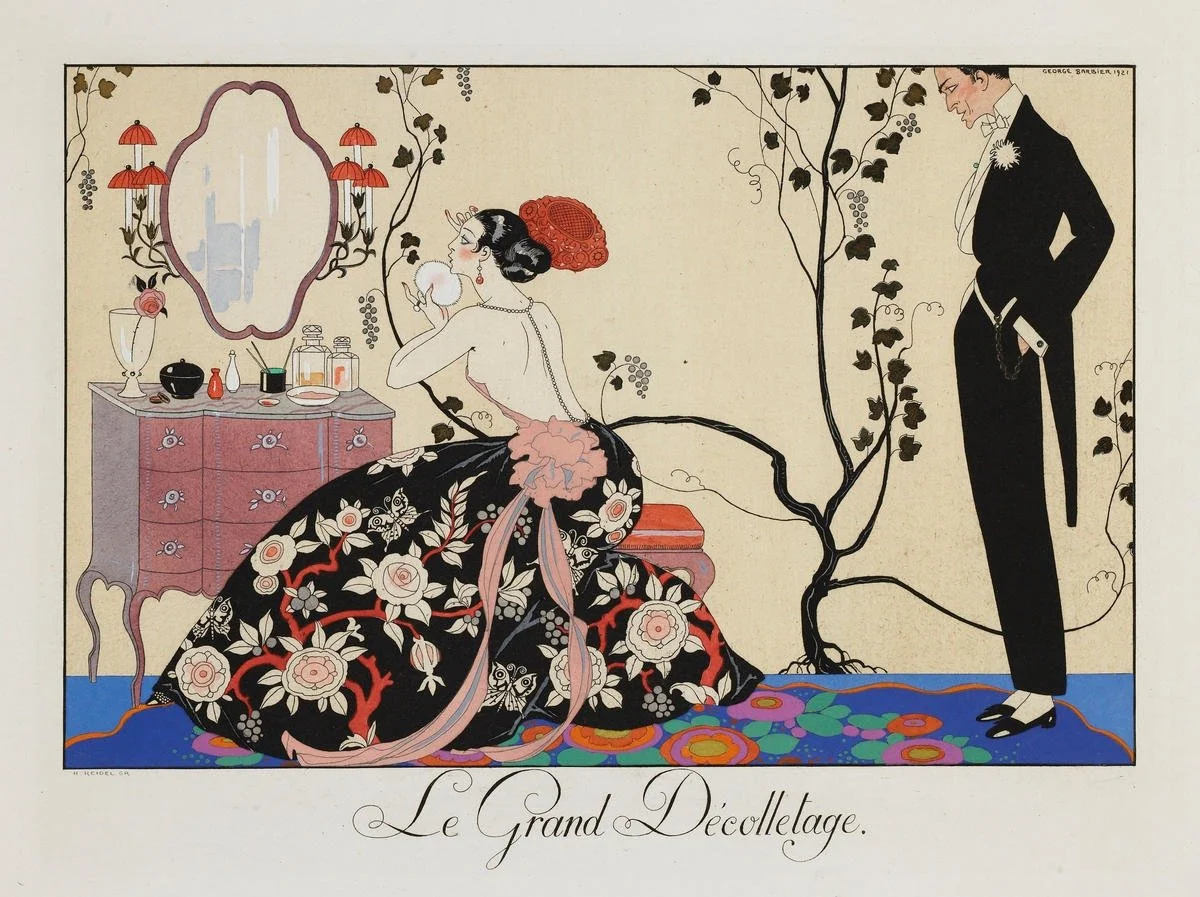
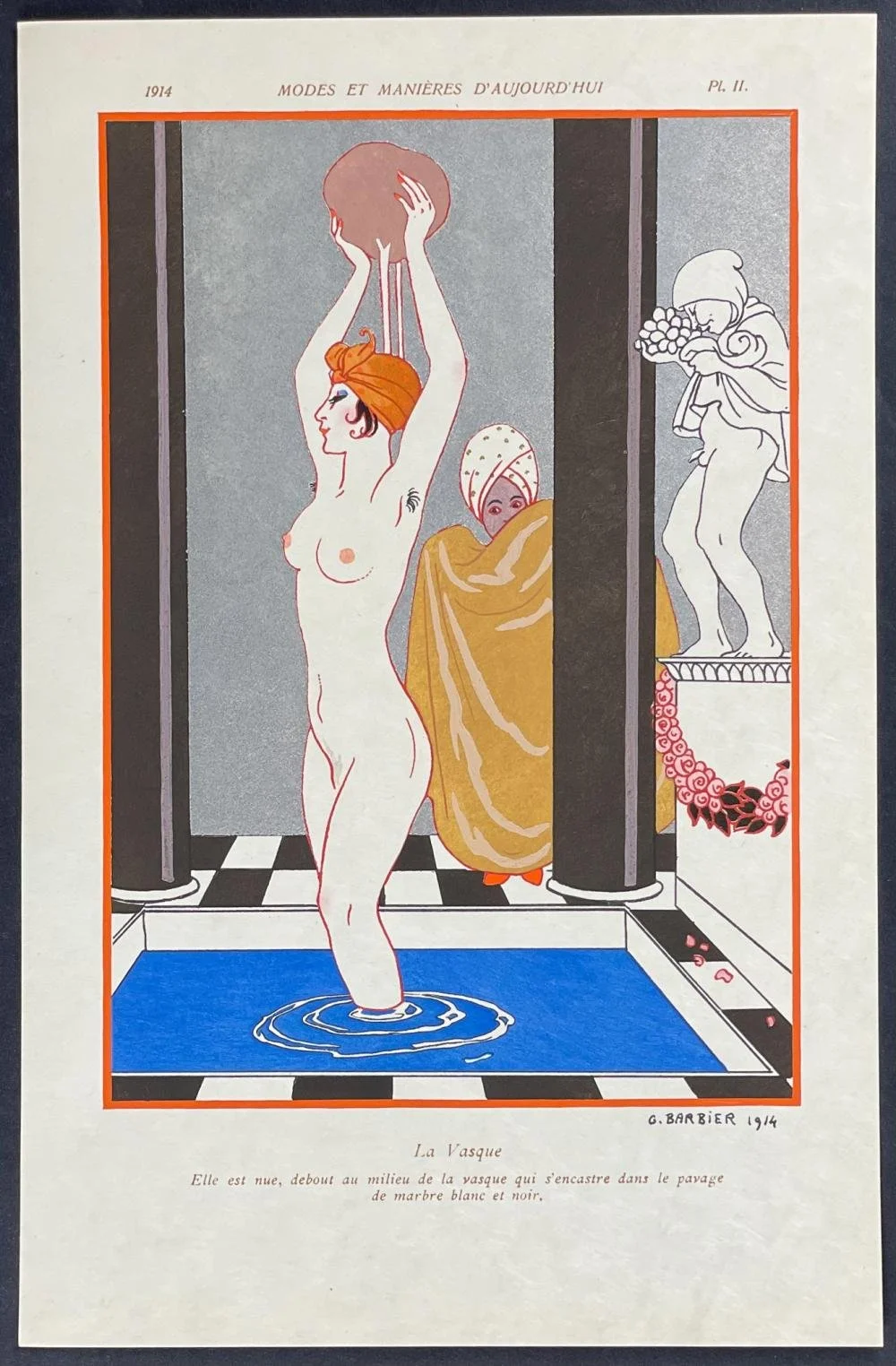
These scenes are, in many ways, pure boudoir art.
Although one might speak of the male gaze, Barbier seems less interested in possession than in beauty, grace, tenderness and sensuality. Even at his most mischievous, he maintains what the French would call a coquin regard.
His worlds shift effortlessly between contemporary Paris, antiquity and the eighteenth century. Greek mythology, Persian fantasy and Rococo elegance merge into a single dreamlike universe where women are often enchantresses, seductresses and protagonists, while men frequently find themselves at their mercy.
George Barbier died in 1932 at the age of forty-nine.
Until illness prevented him from working, he continued to shape his enchanting world. His final projects included illustrations connected to Josephine Baker and new editions of Les Liaisons Dangereuses.
By the time of his death, Les Années Folles had already begun to fade into memory. Yet the world of grace, elegance and beauty that he created remains very much alive.
— Benedetta Agnoletto
George Barbier was one of the first artists I studied when I began drawing and he continues to occupy a special place in my imagination.
What fascinated me from the beginning was not simply his elegance or technical skill, but the world he created around the women he depicted.
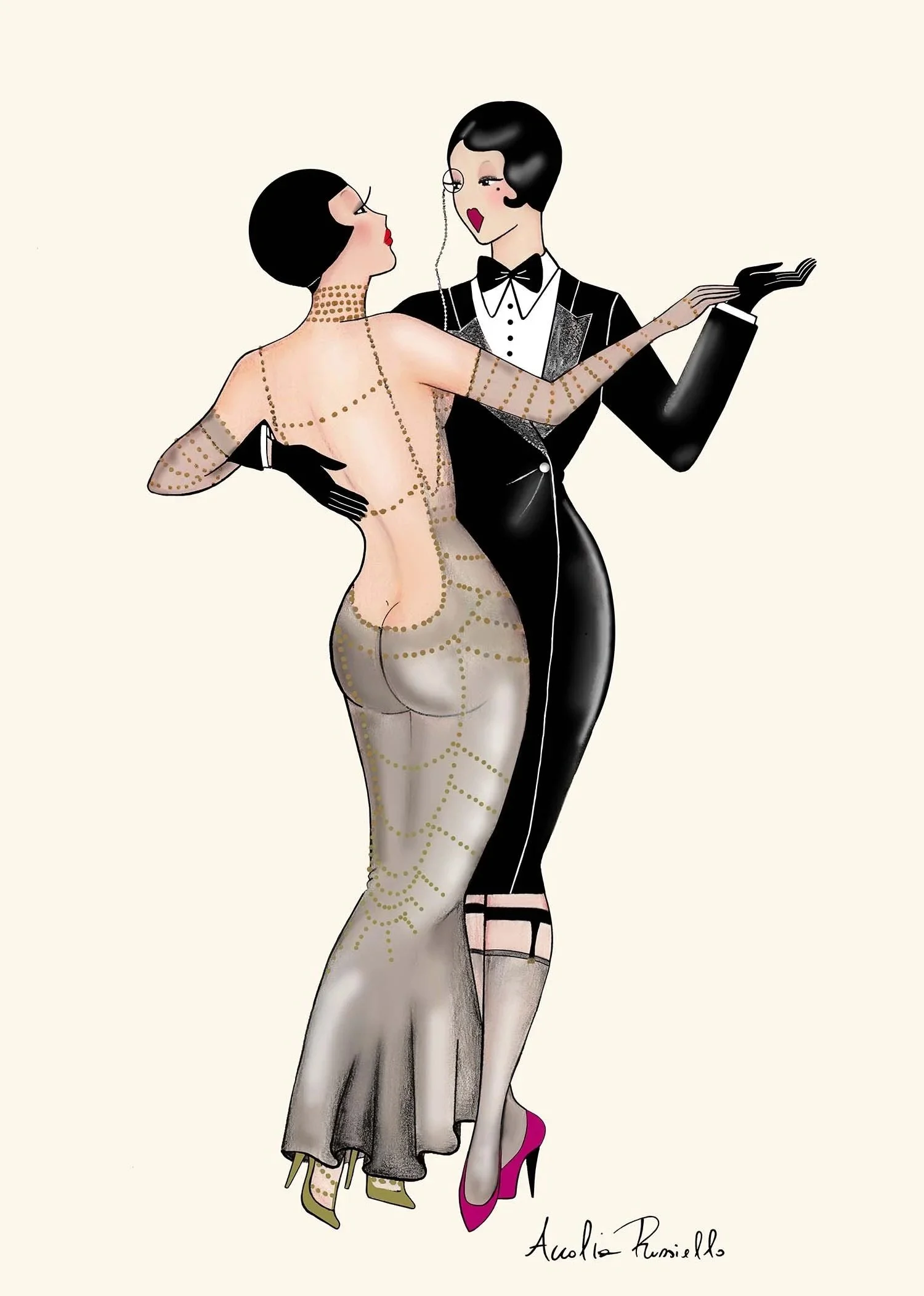
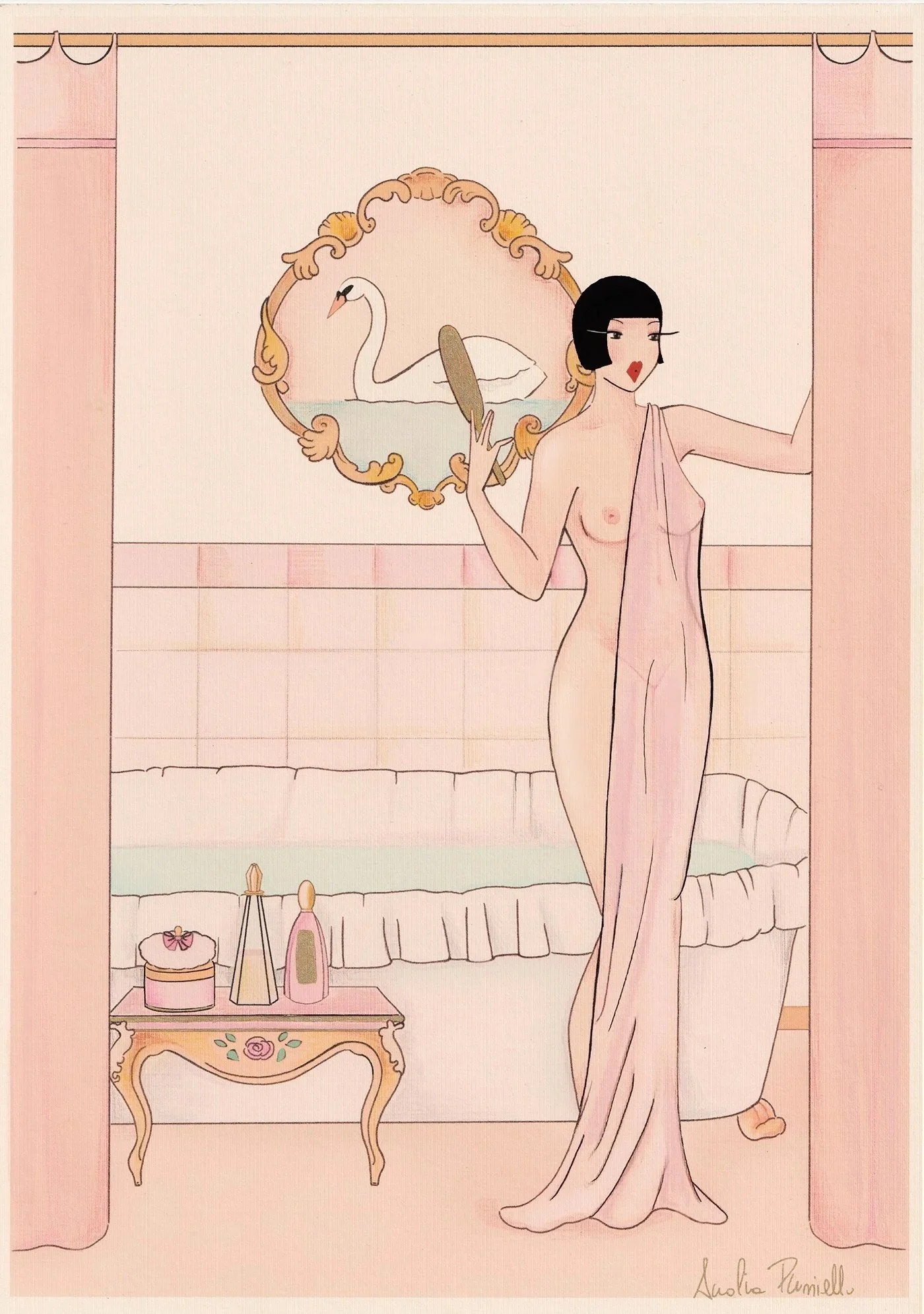
In Barbier's illustrations, women are never passive. They pose, observe themselves, adorn themselves and exist entirely on their own terms. The boudoir becomes a private kingdom where beauty, desire and self-invention belong to the woman herself. This idea sits at the very heart of Madame Dabi's work.
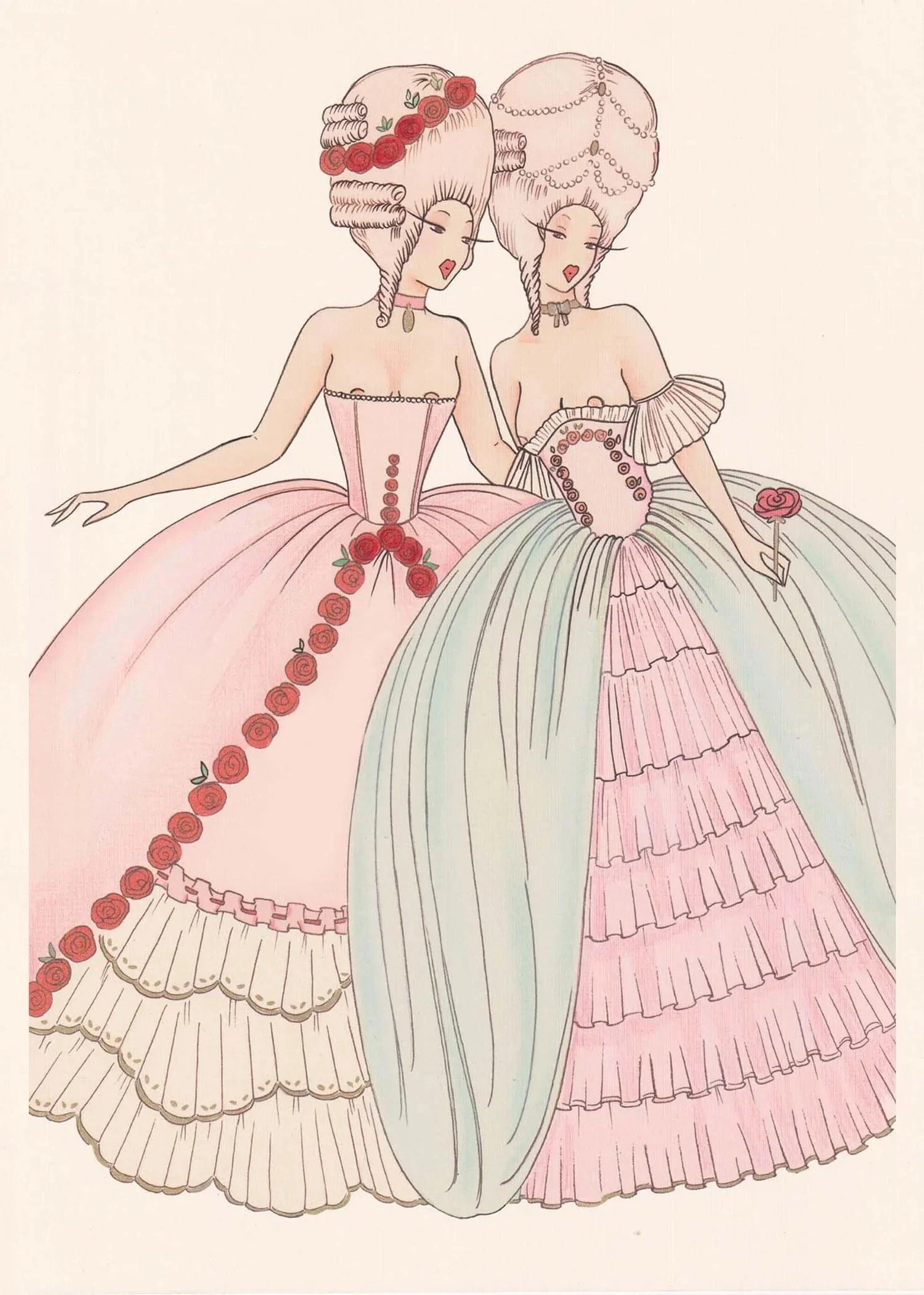
His influence can also be seen in the decorative language of my illustrations. Barbier understood that sensuality did not require excess. A precise contour, an elegant gesture and a carefully composed scene could communicate desire more effectively than overt provocation. The line itself becomes a language of seduction.
There is also the question of time. Barbier was illustrating the 1920s while living through them. He was both witness and participant. My relationship with the decade is different. I approach it from a contemporary perspective, looking back at a world that continues to inspire my imagination. Where Barbier documented modernity, I reinterpret it.
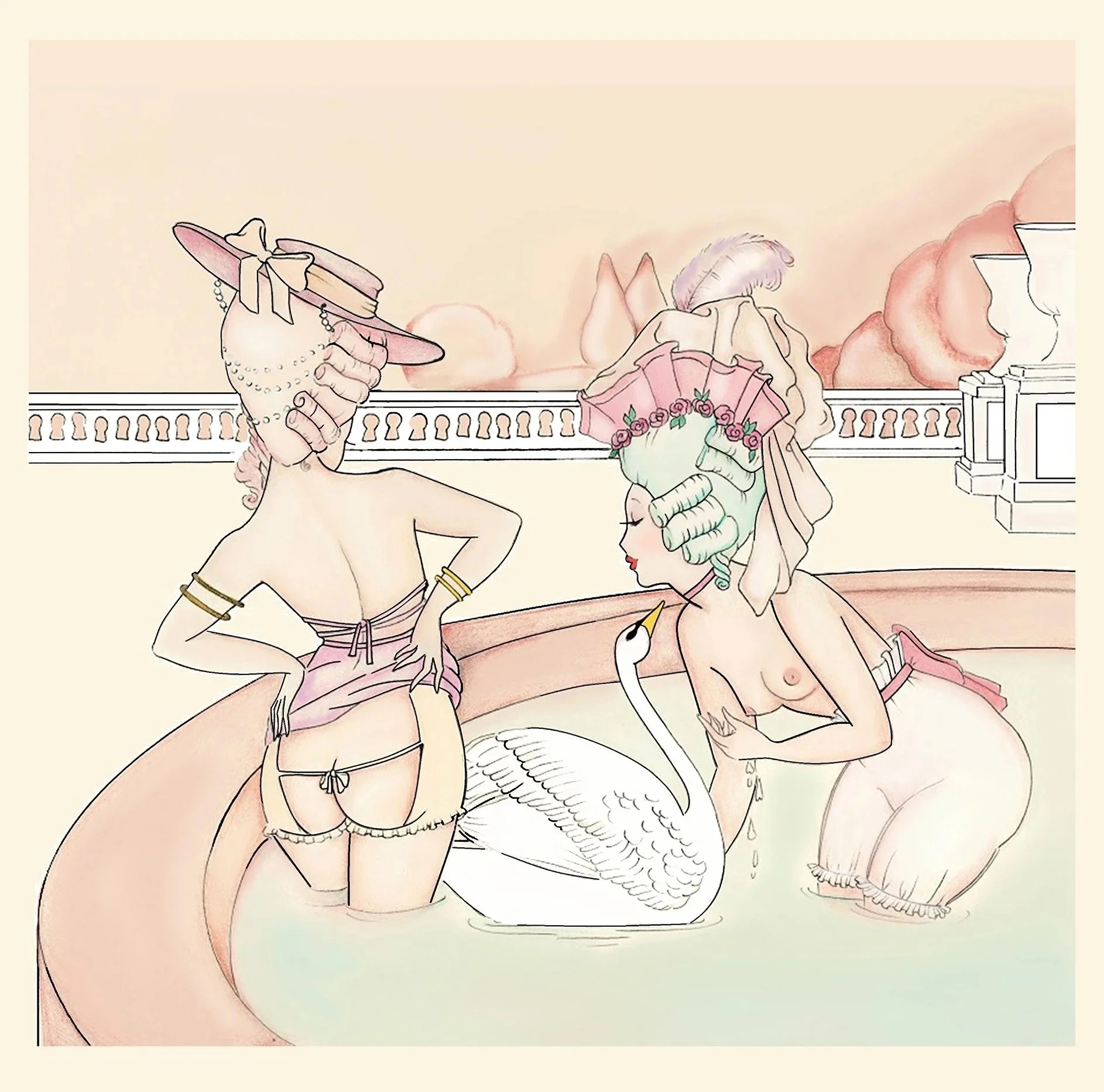
Another aspect that continues to resonate with me is the intimacy between women that appears throughout his work. Women bathing together, dressing one another, sharing mirrors and private moments. These scenes are not presented as scandal but as beauty, tenderness and freedom.
For George Barbier, illustration was never separate from the worlds of fashion, publishing, theatre and decoration. His Art Deco illustrations appeared in the most prestigious magazines and maisons of his time and circulated among the same circles that defined Parisian elegance during the 1910s and 1920s.
I share this vision completely. I have never considered illustration a disposable image. A drawing can be a luxury object in its own right: something collected, framed, lived with and passed on.
In an age of endless reproduction and constant visual consumption, I find this idea increasingly valuable. The appeal of illustration, for me, lies precisely in its ability to resist becoming banal. Intellectual luxury comes before aesthetic luxury.
This may be one of the reasons why George Barbier remains such an important influence on my work. Beyond the Art Deco elegance, the fashion illustrations and the celebrated compositions, he understood that beauty was something worth cultivating deliberately. More than ninety years after his death, that vision still feels remarkably modern.
EXPLORE A SELECTION OF MADAME DABI ILLUSTRATION INSPIRED BY GEORGE BARBIER