Liane de Pougy: The Art of Seduction in Belle Époque Paris
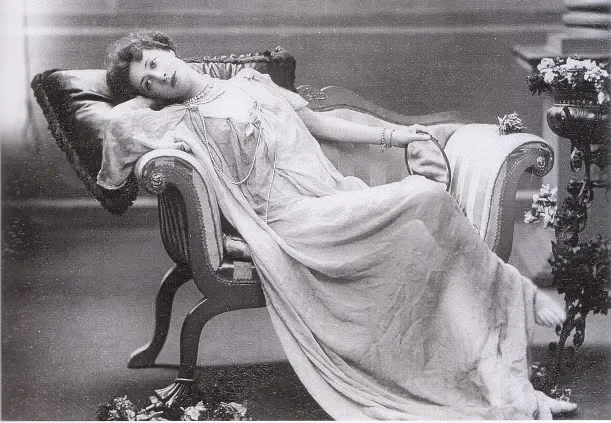
Few women embodied the glamour, contradictions and excess of the Belle Époque quite like Liane de Pougy.
Born Anne-Marie Chassaigne in 1869, she left home at a young age after a brief and unhappy marriage. This rupture marked the beginning of a life entirely shaped by reinvention. From provincial beginnings, she arrived in Paris and entered the world of the stage, performing as a dancer at the Folies Bergère before transforming herself into one of the most famous cocottes of her time.
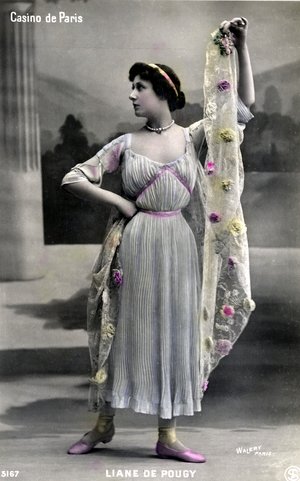
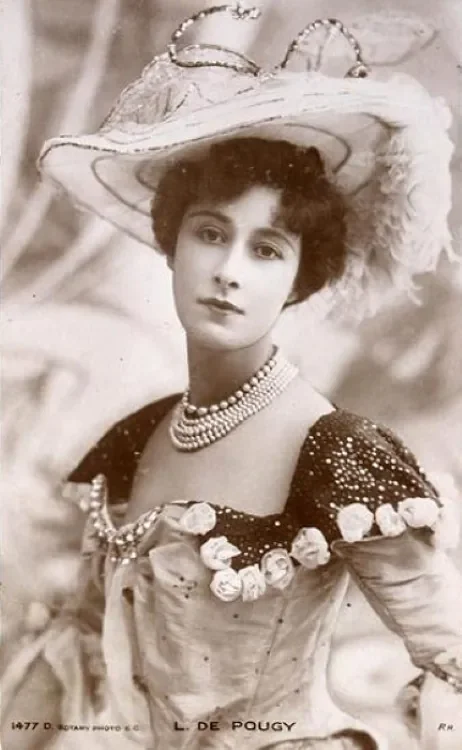
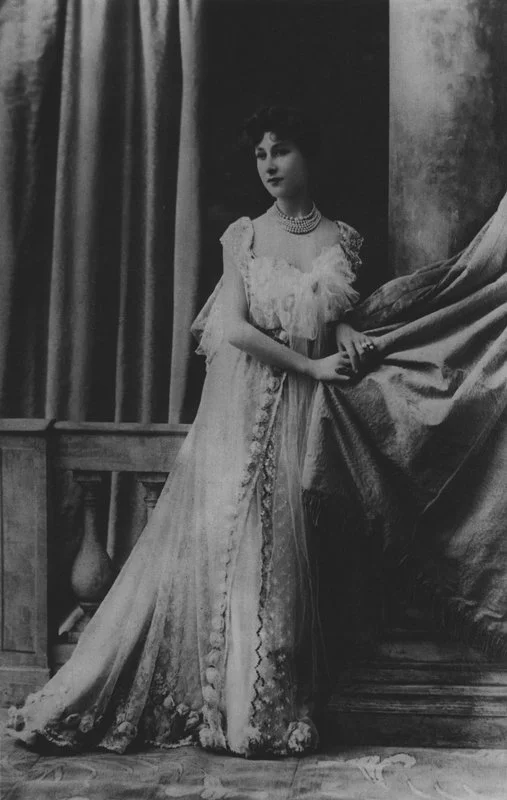
Actress, dancer, writer, celebrity, and one of the most famous cocotte in Parisian society, she moved through aristocratic salons, theatrical circles and elite private apartments with remarkable ease. At the height of her fame, she was known as la reine des courtisanes, and her name circulated in gossip columns, memoirs and private correspondence with equal intensity.
Yet what interests me most about Liane de Pougy is not the scandal itself, but the intelligence behind it: the deliberate construction of an identity as a tool of social ascent.
For one of Paris's most celebrated courtesans, beauty was never simply a gift. It was a craft.
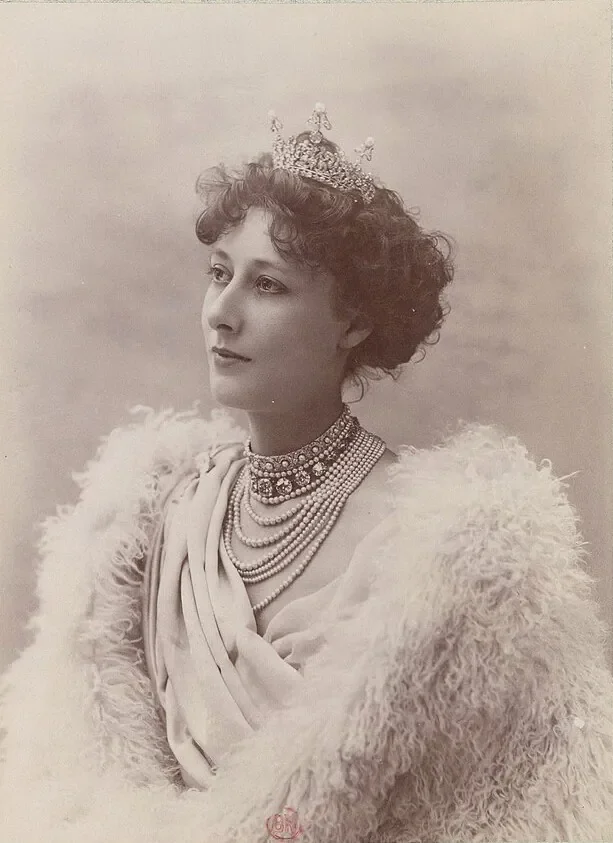
Looking through her portraits, one quickly realizes that Liane understood something many women still pursue today: beauty was not simply something one possessed, but something one carefully constructed.
Her rise through society was inseparable from this mastery of image. Photographers such as Nadar and Reutlinger, along with painters including Antonio de La Gandara, Paul-César Helleu and Henri Gervex, repeatedly captured her transformation into an icon of Belle Époque femininity.
Reutlinger’s studio portraits in particular reveal a precise understanding of seduction. Surrounded by lace, feathers, silk and elaborate gowns, Liane rarely appears passive. Her gaze is direct, composed, and fully aware of the camera. These images are not simple portraits; they are staged constructions of desirability.
Among painted portraits, those by Antonio de La Gandara remain especially significant. His elongated forms and atmospheric refinement contributed to the aristocratic ideal of beauty that defined the period. In his depictions of Liane, seduction is constructed through posture, fabric and controlled distance rather than overt expression.
Like many successful cocottes of the Belle Époque, Liane invested heavily in her appearance. Contemporary accounts describe a wardrobe composed of couture gowns, extravagant hats, pearls, jewels and carefully selected accessories. Fashion was not decoration but strategy.
Couture gowns, extravagant hats, pearls, commissioned portraits, carefully posed photographs and luxurious interiors all contributed to the image she projected to the world. Long before the age of magazines and social media, Liane understood the value of controlling how she was seen. They do not simply show a beautiful woman. They show a woman actively participating in the creation of her own myth.
Her life extended far beyond the role of cocotte. She became one of the most famous lovers of the American writer and salonnière Natalie Clifford Barney, a relationship later reflected in Barney’s Idylle Saphique (1901). Their affair scandalized Parisian society while simultaneously cementing Liane’s reputation as one of the most desirable and discussed women of her generation.
What is often overlooked is that Liane was not only a muse but also an author. She wrote novels and memoirs throughout her life, documenting a world of performance, luxury and self-construction with unusual precision. Through her writing, she controlled not only how she was seen, but how she would be remembered. Her Cahiers Bleus were published posthumously in 1977, adding another layer to the portrait she left behind.
In 1910, she married Prince Georges Ghika and became Princess Ghika. By that time she was already one of the most famous women in France.
Perhaps the most unexpected chapter of her life came later. After decades immersed in fame, desire and scandal, Liane gradually withdrew from public life and embraced spirituality, eventually becoming a Dominican tertiary. Some biographical readings suggest that this profound shift may have been influenced by the death of her son during the First World War.
The most compelling aspect of Liane de Pougy is not simply that she was beautiful or desired. Paris was full of beautiful women. What set her apart was the intelligence behind the performance. She understood that seduction could be cultivated through clothes, bodies in motion, portraits, interiors and mystery. More than a century later, that carefully constructed world remains as powerful as the woman herself.
