The Neo Deco Boudoir: Art Deco Glamour for a Modern Interior
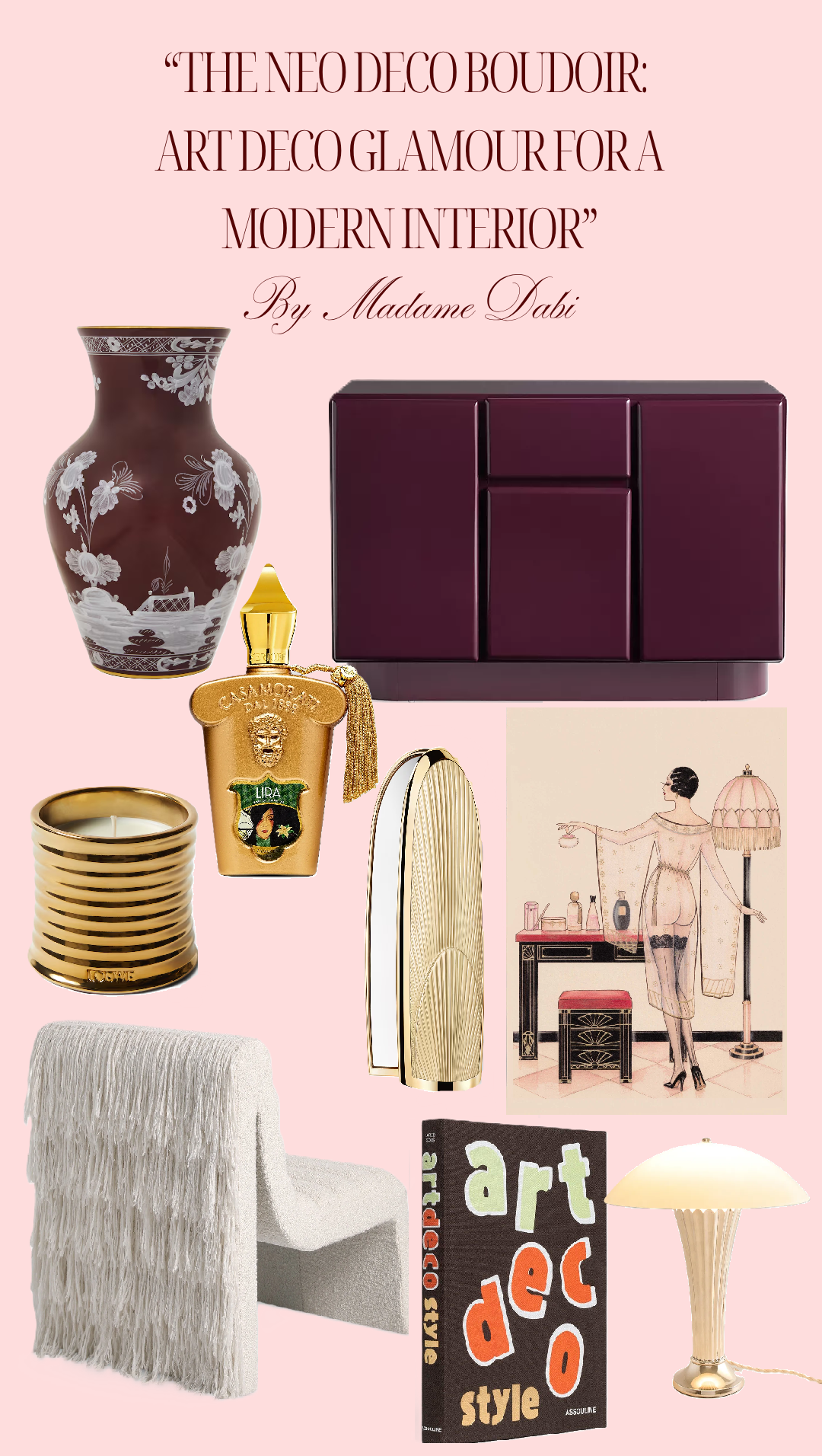
Neo Deco is one of the interior trends shaping 2026. It takes the geometry, saturated colours, polished metals and rich materials associated with Art Deco and brings them into contemporary interiors in a more selective way. Compared with classic Deco, the result is less theatrical and less defined by a single style: a few strong references are mixed with contemporary pieces and more personal spaces.[4]
The boudoir already had an important place within the original Art Deco language. Émile-Jacques Ruhlmann designed a Boudoir-Library in 1918, while his drawing Le Boudoir, from around 1920, shows a carefully composed dressing room with vertically grained walls, a patterned ceiling and a dressing table.[1]
A few years later, Armand-Albert Rateau created the private apartment of couturier Jeanne Lanvin in Paris. Her boudoir, positioned between the terrace and the bedroom, combined grey and gold panelling, black-and-white marble, Siena marble columns and glass cabinets displaying objects from her collection.[2]
The dressing table itself became closely associated with Art Deco glamour. The Metropolitan Museum notes that in the early twentieth century these pieces came to embody a modern idea of luxury, reinforced by films of the 1920s and 1930s that repeatedly placed their heroines in front of elegant vanities.[3]
What interests me about the current Neo Deco return is that none of this needs to be reproduced literally. A modern boudoir can borrow from the period without becoming a period room. Dark wood, marble, lacquer, glass, polished metal or a strong curved form can be enough to establish the reference when they are mixed with contemporary pieces.[4]
To me, a Neo Deco boudoir should still feel personal and inhabited rather than styled as a period room. I like interiors that seem to have taken shape over time, where not everything belongs to the same moment or follows the same decorative rule. The Deco influence can appear through a few deliberate choices: the shape of a dressing table or mirror, lacquered or dark wood, glass, metal and richer textiles, mixed with the objects that naturally collect around a vanity over time.
The result should feel intimate and individual, reflecting the taste, habits and personality of the person who inhabits it.
Perhaps the most interesting part of Neo Deco is not its nostalgia at all. It belongs to a wider move away from anonymous, neutral interiors towards rooms with stronger colour, materials and personality. And it does not require an entire room to follow the style: a single object, chosen for its shape, finish or detail, can be enough to introduce a Deco note into a contemporary space.
With love,
Madame
Madame Dabi Art for a Neo Deco Boudoir
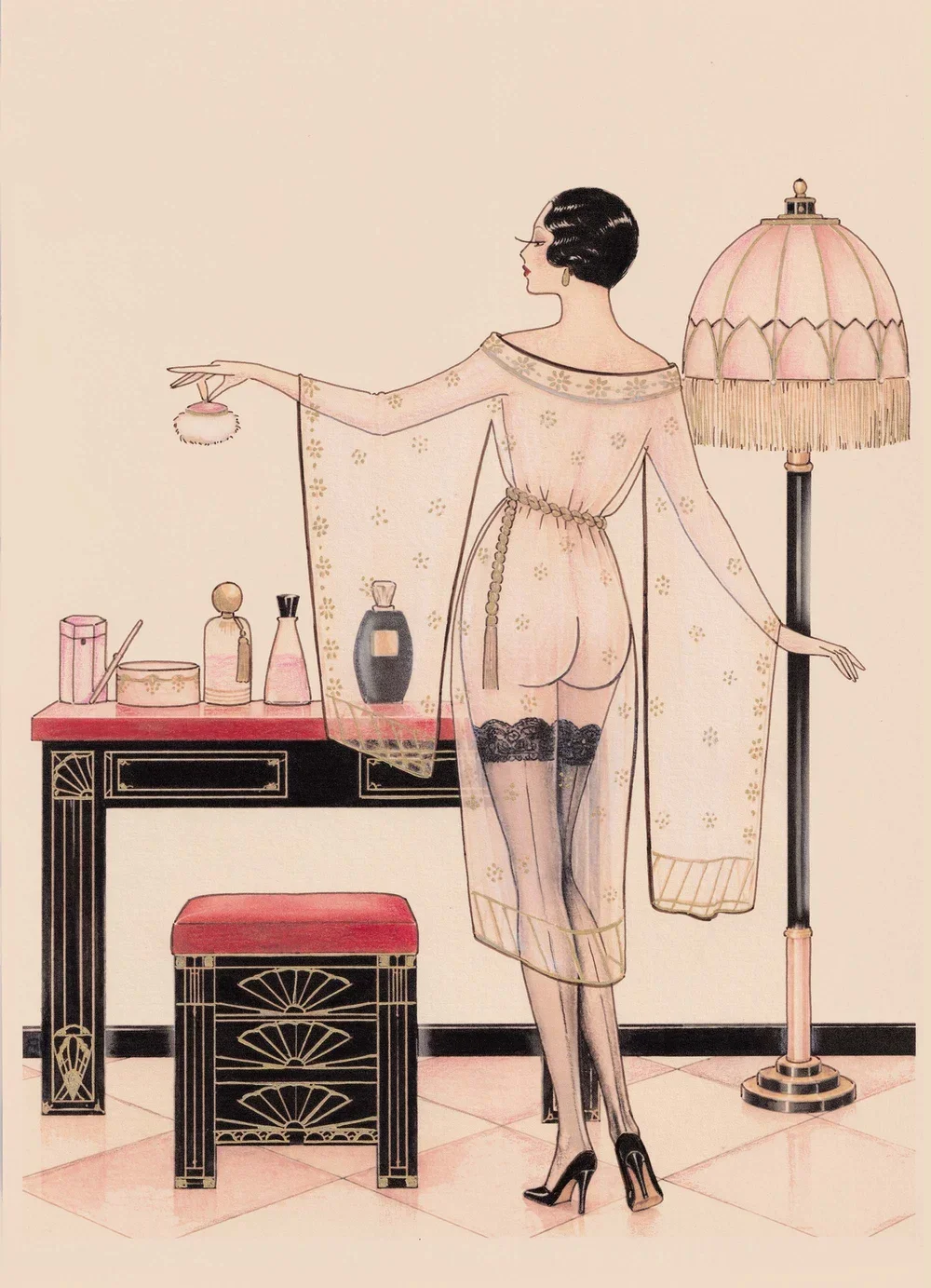
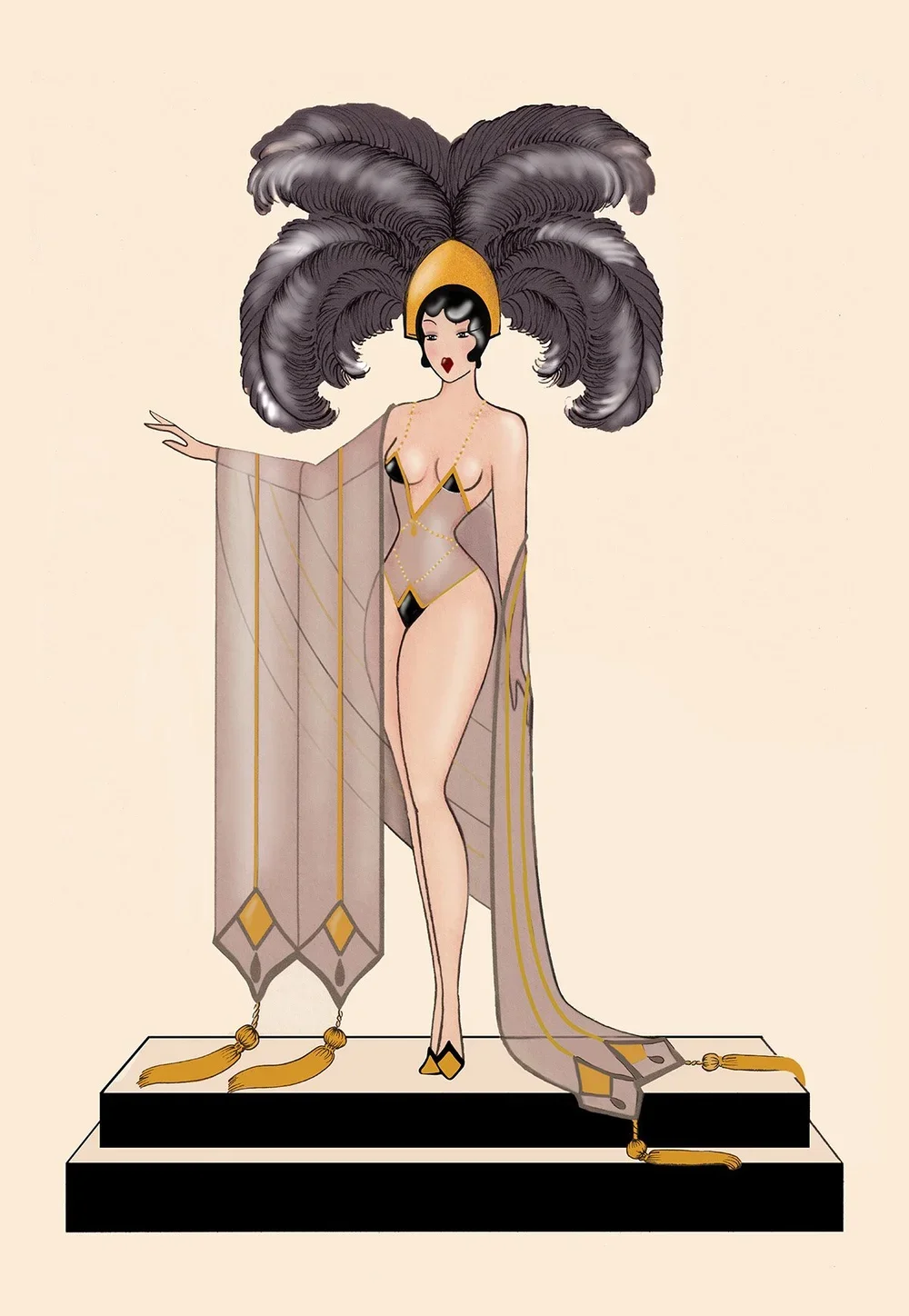
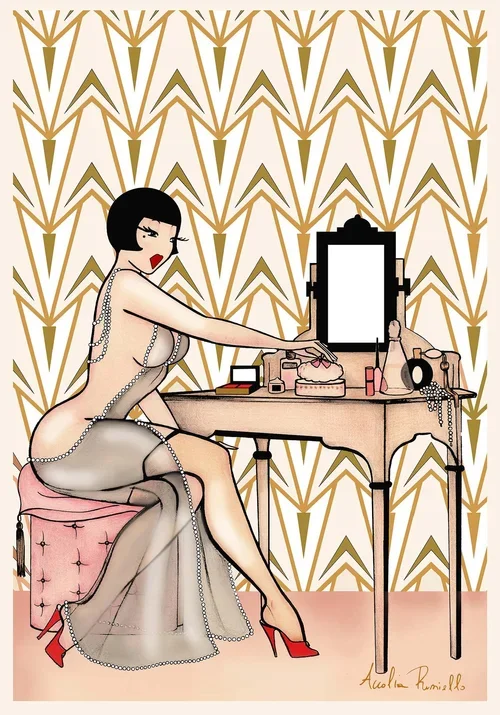
Madame’s Neo Deco Edit
Notes
[1] The Metropolitan Museum of Art, Ruhlmann: Genius of Art Deco. The museum documents Ruhlmann’s 1918 Design for a Boudoir-Library and his Art Deco interiors and furniture.
https://www.metmuseum.org/exhibitions/listings/2004/ruhlmann/photo-gallery
[2] Musée des Arts Décoratifs, Paris, documentation of Jeanne Lanvin’s private apartment designed by Armand-Albert Rateau, circa 1924–1925. The museum describes the boudoir’s position between terrace and bedroom and its grey-and-gold panelling, marble, columns and display cabinets.
https://madparis.fr/l-appartement-prive-de-jeanne
[3] The Metropolitan Museum of Art, Metropolitan Vanities: The History of the Dressing Table. The Met identifies the Art Deco period as a moment when luxurious dressing tables came to epitomize modern glamour and luxury, also noting their recurring presence in films of the 1920s and 1930s.
https://www.metmuseum.org/fr/press-releases/metropolitan-vanities-2013-exhibitions
[4] Pinterest Predicts 2026, Neo Deco; Kelsey Clark, “‘Neo Deco’ Is the Designer-Approved Trend of 2026,” Architectural Digest, 12 March 2026. Pinterest identifies Neo Deco as a 2026 home trend, while designers interviewed by Architectural Digest distinguish it from classic Art Deco through a more selective, less theatrical and more personalised use of Deco forms and materials.
https://business.pinterest.com/pdf/pinterest-predicts/2026-trend-report/
https://www.architecturaldigest.com/story/neo-deco-decor
